
Library: Books
Investment Books
The Intelligent Investor by Benjamin Graham
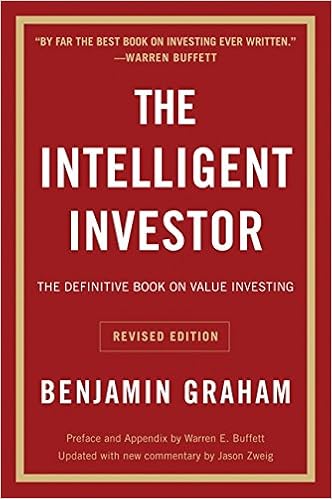
Benjamin Graham is regarded as one of the greatest investment teachers in the twentieth century. His philosophy of ‘value investing’ has provided investors with the ability to develop a deep understanding of value investing. Benjamin Graham’s timeless investment wisdom, principles, and strategies can still be applied to the market today. His book, “The Intelligent Investor” is vital for anyone who is aspiring to become an investor. This book which is recommended by Warren Buffett to all beginners because it is argued to be one of the most influential pieces of value investing literature.
One Up On Wall Street by Peter Lynch
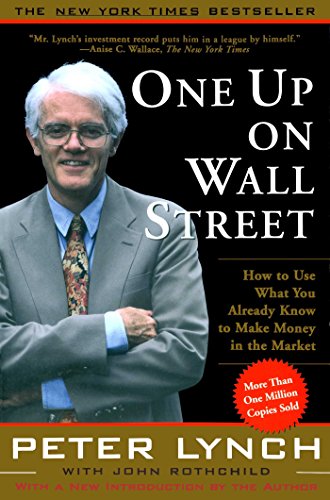
The legendary mutual-fund manager Peter Lynch demonstrates the advantages that average retail investors have over professional institutional investors, and how they can utilize these specific advantages to achieve greater financial success. According to Lynch, investment opportunities are all around us by simply identifying what popular business looks like. His book One Up On Wall Street offers easy to understand investment advice that is fundamental for an aspiring investor.
Security Analysis by Benjamin Graham & David L. Dodd

Benjamin Graham and David L. Dodd’s book Security Analysis is a classic piece of investment literature, where the lessons taught still hold significant relevance in today’s stock market, despite being published in 1934. The book demonstrates various techniques and strategies to help the individual investor achieve success, while providing timeless guidance and advice, such as the careful analysis of balance sheets and much more. Graham and Dodd lived through the extreme instabilities presented by The Great Depression and World War II, constructing an applicable framework of successful and stable investing for the rest of the 20th century and into the 21st century.
The Essays of Warren Buffett by Warren Buffett

Warren Buffett is considered to be one of the most successful investors ever. Buffett is currently serving as the chairman and CEO of his company Berkshire Hathaway. His investment philosophy is explained through his written letters to Berkshire Hathaway shareholders over the past few decades, which contains his principles of investing and analyzing business practices. His definitive workings, presented in the Essays of Warren Buffett, provides readers with timeless investment wisdom about important investment topics.
The Warren Buffett Way by Robert G. Hagstrom

Robert G. Hagstrom, in his book The Warren Buffett Way, focuses on the career of legendary value investor Warren Buffett. This book demonstrates how Buffett’s investment techniques and methods evolved through time by explaining his key investment decisions which has contributed to his superior investment performance. Hagstrom provides an in-depth examination of each major security that Buffett purchased, analyzing his unique philosophy in a comprehensive, interesting and easily-digestible manner.
Warren Buffett’s Portfolio by Robert G. Hagstrom

This book walks readers through the logical steps of investment and how to manage a portfolio of stocks. Robert G. Hagstrom closely analyzes features of Buffett’s investment success with his concentrated portfolio that has yielded consistent returns. Hagstrom’s work is easily-digestible and can be applied to investors at all levels. This book reveals how small retail investors can build a portfolio using Buffett’s principles to achieve the best possible results in the stock market.
The Most Important Thing by Howard Marks

Howard Marks, the chairman, and co-founder of Oaktree Capital Management, provides readers with four decades worth of investment management knowledge, coupled with a timeless investing philosophy. In his book, The Most Important Thing, Marks identifies the keys to successful investment management, and the perils that can ruin investment returns or even a financial career. Marks provides insight into today’s modern markets, highlighting fundamental investing concepts, frameworks for critical thinking, risk assessments and an investment strategy that will remain relevant into the future.
Beating the Street by Peter Lynch

Famed money manager, Peter Lynch returns in his book Beating the Street, explaining his personal philosophy and strategies for investing by demonstrating how to pick the best stocks and mutual funds so to construct the strongest investment portfolio. His ‘invest in what you know’ strategy is relevant for all types of investors, both big and small. This book accentuates that anyone can become an expert when investing in companies if they have a full understanding of what they own. This step-by-step strategy describes how individuals or funds can pick stocks to construct a portfolio which can outperform the market.
Berkshire Hathaway Letters to Shareholders by Warren Buffett
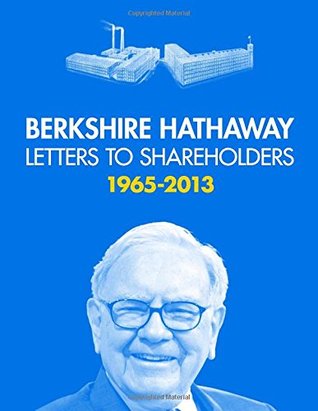
‘In 1965, Warren Buffett took control of Berkshire Hathaway Inc. A small textile company, at around $18 per share. The same company today trades for $303,210 per share (2018)’.
Berkshire Hathaway Letters To Shareholders gathers 50 years’ worth of letters made to the shareholders of Buffett’s company, Berkshire Hathaway. This book highlights Buffett’s methods and principles which have helped him achieve superior returns.
Common Stocks and Uncommon Profits by Philip Fisher
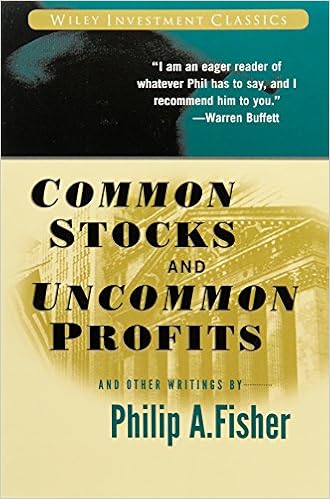
Phillip Fisher is widely renowned as one of the greatest investors of all time. Warren Buffett regarded Philip Fisher as one of his most influential mentors. Fisher was known to be the ‘father of growth investing’ through his timeless investment philosophies. Despite being published in 1958, this book is still remarkably significant in today’s stock market and invaluable for any aspiring stock market investor, who is looking to learn about how to identify growth companies when investing.
Margin Of Safety by Seth Klarman

Margin of Safety, written by Seth Klarman outlines the basic concepts of value investing, and how it has been historically tested to deliver excellent investment results compared to ‘speculative’ methods. Building upon Benjamin Graham’s ‘margin of safety’ concept, Klarman explains the philosophy of value investing and how to avoid investment fads by offering valuable advice on personal portfolio management.
Poor Charlie’s Almanack by Peter D. Kaufman
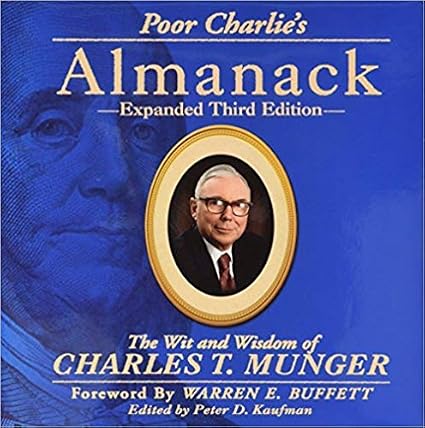
The collected wisdom of Charles T. Munger, known as Warren Buffett’s long-time partner, can be found in Peter D. Kaufman’s book Poor Charlie’s Almanack. It comprises a vast collection of Munger speeches, lectures, and public commentary. It brings together his philosophy on investing, business and life itself.
Reminiscences of a Stock Operator by Edwin Lefevre

Reminiscences of a Stock Operator provides insight into the investing world, notably crowd psychology, market timing, the art of trading and speculation. It is a must-read for all types of investors, with a focus on recounting of timeless stock market tales that to provide knowledge of key principles.
The Little Book of Common Sense by John Bogle

John Bogle, a legendary mutual fund pioneer, described the simplest and most effective investment strategy in his book The Little Book of Common Sense Investing: The Only Way to Guarantee Your Fair Share of Stock Market Returns. He is an advocator of passive investing through justifying that buying and holding a broad market index over the long term is the safest way to build wealth.
Irrational Exuberance by Robert Shiller

Robert Shiller’s classic Irrational Exuberance provides unique insight into behavioral finance and the volatility of the market. The title accurately describes the structural, cultural and psychological factors behind the excessive and irrational levels of price movement we see in the market.
Dollars and Sense by Dan Ariely and Jeff Kreisler

In Dollars and Sense, best-selling author and behavioral economist Dan Ariely teams up with financial comedian Jeff Kreisler to challenge many of our most fundamental assumptions concerning the relationship between our brains and money. Dollars and sense claim that emotions play a very important role in shaping financial behavior, arguing that we can override these instincts to make better financial choices through avoidance of common psychological errors.
Predictably Irrational by Dan Ariely

Dan Ariely stands to refute the common assumption that we behave in rational ways when it comes to making choices; noting we rarely make rational and intelligent ones. Ariely, in his book Predictably Irrational, claims that we instead consistently underestimate, procrastinate and behave irrationally; in a manner that is systematic and highly predictable by nature.
You Can Be a Stock Market Genius by Joel Greenblatt

Fund manager Joel Greenblatt, the founder of Gotham Capital, demonstrates how individuals can discover investment opportunities that top investment experts, fund managers, and business-school professors regularly overlook. You Can Be a Stock Market Genius identifies the areas where small, retail investors can exploit unfair advantages over the Wall Street wizards. It is a practical, easy to understand book providing all the tools a small-time investor needs in order to succeed.
Market Wizards by Jack D. Schwager

Jack Schwager, in his book Market Wizards, interviews a large number of successful traders participating in stock, currency and commodity markets. Schwager finds commonalities and draws parallels between each ‘wizards’ advice.
The New Market Wizards by Jack D. Schwager

Jack Schwager returns again with a continuation of his previous work with ‘The New Market Wizards’. This book discloses the insights of successful traders, and the financial strategies responsible for their success. Schwager interviews a new line of ‘market wizards’ and encourages them to share their insights and advice to the aspiring investor.
A Random Walk Down Wall Street by Burton G. Malkiel

Burton G. Malkiel’s, A Random Walk Down Wall Street, is a best-selling and classic investment book, providing an important lesson on how to manage investments and create a strong portfolio. It is an informative guide on how to navigate through the frequently turbulent and volatile market. Malkiel accentuates the importance of investing in a wide variety of assets, whilst following a more passive style of investing.
The Alchemy Of Finance by George Soros
George Soros, known as ‘the man who broke the Bank Of England’, presents a practical and theoretical account of financial trends and a modern day framework by which to understand the market in his book, The Alchemy of Finance. Soros’s innovative investment practices and strategies provide valuable and timeless lessons to the an aspiring successful investor.
The Psychology Of Speculation: The Human Element in Stock Market Transactions by Henry Harper

Henry Harper in his book, The Psychology of Speculation: The Human Element in Stock Market Transactions, argues that we must be aware of our own prejudices and assumptions whilst trading. The objective of this is to be able to identify and recognize when such irrationalities begin to alter and interfere with our reasoning. Harper utilizes his Wall Street experience to teach us how to control personal discriminations and become ‘enlightened’ speculators.
Buffett: The Making Of An American Capitalist by Roger Lowenstein

Buffett: The Making of an American Capitalist by Roger Lowenstein tracks the financial life of Warren Buffett and his outstanding investment record. Lowenstein highlights Buffett’s unique investment strategy, his long-term philosophy, purchasing undervalued stocks and holding onto such companies until profits materialize.
Flash Boys by Michael Lewis

This book exposes the world of high-frequency trading (HFT) on Wall Street and how it has changed the landscape of trading. Lewis tells the story of a small group of Wall Street outsiders who realize that the U.S. stock market has been rigged for the benefit of insiders and how they set out to reform it.
Liar’s Poker by Michael Lewis
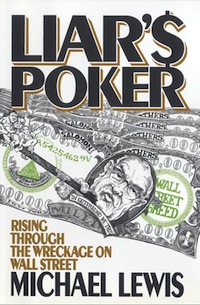
Set in the 1980s, this book is a semi-autobiographical account by Michael Lewis of his experiences as a bond salesman on Wall Street during a period of excessive greed and aggressive competition. It provides an insightful and humorous look at the culture of Wall Street in the 1980s.
The Big Short by Michael Lewis
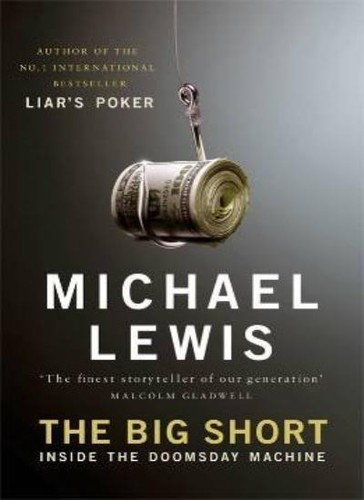
This book chronicles the events during the financial crisis of 2007-2008, focusing on those who bet against the US mortgage market. Through the eyes of several key players, Lewis explores the causes of the financial crisis and the drama and intrigue of those who saw the collapse coming and profited from it.
The Little Book That Beats The Market by Joel Greenblatt
Joel Greenblatt outlines a “magic formula” for investing that aims to beat the market by focusing on buying good companies at bargain prices. The book simplifies investment strategies into practical steps and emphasizes discipline and long-term perspectives.
The Snowball: Warren Buffett and The Business of Life by Alice Schroeder

This biography of Warren Buffett offers a comprehensive and intimate look into the life and career of one of the world’s richest and most successful investors. It explores his investment strategies, personal anecdotes, and the philosophy that shaped his decisions.
The Four Pillars Of Investing by William Bernstein

This book provides investors with the foundational knowledge needed to develop a winning portfolio strategy. It covers theory, history, psychology, and the business of investing, offering a well-rounded perspective on what it takes to achieve success in investing.
The Confidence Game by Maria Konnikova

Not primarily a finance book, this work delves into the minds of con artists and their victims, exploring the psychological foundations of confidence tricks. While not directly about financial markets, it offers insights into manipulation and deception that can be relevant to understanding fraudulent schemes in finance.
Fooled By Randomness by Nassim Nicholas Taleb

Taleb explores the impact of random and unpredictable events in financial markets and other aspects of life. He argues that humans often misinterpret these events and misunderstand the role of luck and skill in their outcomes, offering a compelling critique of market behaviors and decision-making processes.
Think and Grow Rich by Napoleon Hill

A bestselling success book published in 1937, Think and Grow Rich by Napoleon Hill has been described as the ‘granddaddy of all motivational literature’; as such it is one of the first books to explore the idea of success. It draws on stories of Henry Ford, Thomas Edison, and other millionaires to consolidate the principals he advocates in his classic, timeless book that set the stage for motivational thinking.
The Richest Man In Babylon by George S. Clason

A classic, bestselling book published in 1926, The Richest Man in Babylon by George S. Clason provides financial advice using a collection of parables set in ancient Babylon. Each short story provides a simple lesson because of the characters in each parable declaring a unique perspective in the world of business, finance and wealth management.
Principles by Ray Dalio

Ray Dalio, one of the world’s most successful investors and entrepreneurs, shares the most valuable principals he has developed and learned over the years; identifying the keys to creating extraordinary results in business and life. Aptly named Principals, this book is significant, unconventional and moving book that provides a rare chance in gaining financial and philosophical advice.
Rich Dad, Poor Dad by Robert Kiyosaki

Robert Kiyosaki has changed the way we think about money, providing contradicting perspectives, irreverence and boldness in his advocating for financial education. Kiyosaki’s book Rich Dad, Poor Dad challenges a variety of conventional wisdom, such as the necessity of high income to become rich, the belief that real estate is the best asset one can attain and much more. It is an easily digestible book and a starting point for those wishing to control their financial future.
Practice with one example
Open the example. Find The Little Book of Common Sense Investing in this library. Use the course calculator prefilled with $100, five years, and an illustrative 7% rate; change only the rate to 6% and explain why costs and assumptions matter to long-term results.
Key takeaways
- Record a book’s author, edition and publication date.
- Separate an investing principle from a dated company example.
- Check material factual claims against original evidence.
Check your understanding
Answer each question, then open the explanation.
1. Which details should you record when using a book from this library?
Show answer and why
Answer: Its author, edition, publication date and the relevant passage.
Why: Those details allow you to find the same argument again and understand its historical context.
2. Can a company figure in an older book be treated as a current figure?
Show answer and why
Answer: No. Check the original period and current filing separately.
Why: An example can explain a principle while its numbers describe an earlier business.
3. How can you turn reading a chapter into a check of your understanding?
Show answer and why
Answer: Explain its main idea in your own words and identify one claim you can verify.
Why: This separates understanding the argument from merely remembering a quotation.
AI responses are for educational purposes. Always verify with official course materials.
This lesson teaches a concept. It is general education, not advice about your money. Before you act on anything you learn here, speak to someone licensed.
AI responses are for educational purposes. Always verify with official course materials.
This lesson teaches a concept. It is general education, not advice about your money. Before you act on anything you learn here, speak to someone licensed.
This lesson teaches a concept. It is general education, not advice about your money. Before you act on anything you learn here, speak to someone licensed.

