
The Warren Buffett Way
About this summary
This is our summary of the ideas in this book, written in our own words. It is not the book, it is not authorized by the author or publisher, and it is not a substitute for reading it.
The strategies described belong to the author. Including them here is not our recommendation that you use them.
Book summary
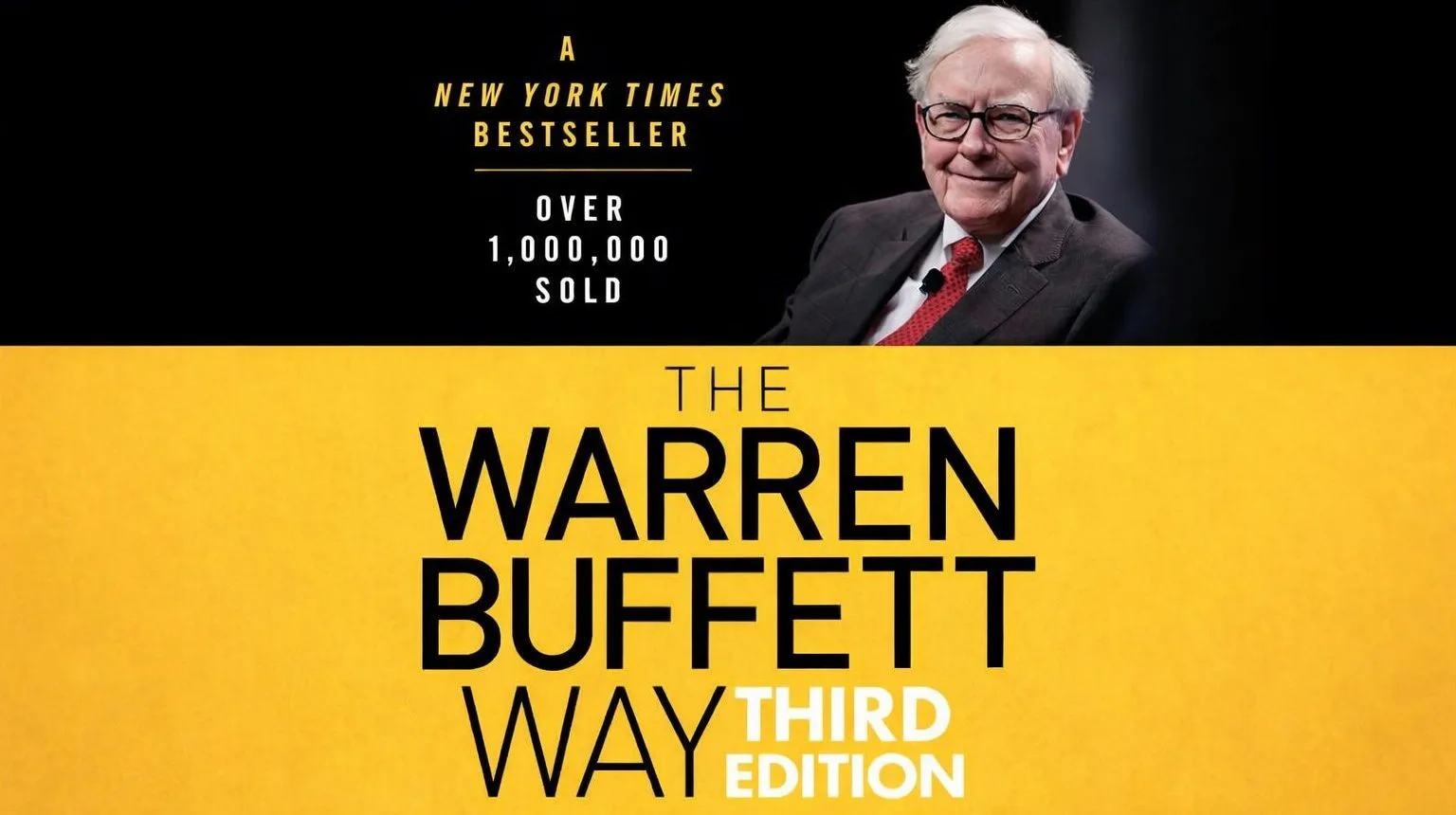
The Warren Buffett Way
By Robert G. Hagstrom
Quick Answer
What Is The Warren Buffett Way About?
The Warren Buffett Way explains how Buffett evaluates businesses, management teams, financial performance and purchase prices before investing. It combines Benjamin Graham’s margin of safety, Philip Fisher’s focus on quality and growth, and Charlie Munger’s preference for wonderful businesses bought at fair prices. Its central lesson is to think like a long-term business owner, concentrate on understandable companies with durable advantages and remain disciplined when market emotions create mispricing. This is a historical account of an investing approach. Greg Abel became Berkshire Hathaway’s President and CEO on 1 January 2026.
Chapter 1: A Five Sigma Event The World’s Greatest Investor
The American Express Scandal
In the 1960s, American Express experienced a sudden and dramatic 50% decline in share price after being linked to a scandal that shocked the public. Although the news caused turmoil in the market, Warren Buffett wanted to see if the scandal truly impacted customer behavior in any meaningful way.
Observing Real World Consumer Reactions
To gain deeper insight, Buffett personally visited and watched cash registers where American Express was accepted. His intent was to see if the controversy prompted customers to reject American Express services. Surprisingly, Buffett noticed no material change in consumer usage, customers continued to use American Express as they always had.
Irrational Market Pricing
Despite the company’s ongoing business strength, the market had punished its stock price, reflecting a clear instance of market irrationality. In other words, the scandal caused investors to dramatically undervalue the company, even though there was no lasting damage to its core business.
Rewarding Opportunities in Market Inefficiencies
Warren Buffett has frequently noted that market inefficiencies can present prime opportunities. This episode with American Express became a signature example of Buffett’s approach: buying strong companies that are temporarily mispriced and exercising decisive action once he identifies such chances. Buffett’s actions in this scenario underline the importance of ignoring panic induced drops when the fundamental business has not deteriorated.
Questioning the Efficient Market Theory
From 1965 to 2013, Buffett achieved a compounded annual return of 19.7%, a remarkable performance that calls into question the Efficient Market Theory taught in many finance programs. That theory suggests all available information is always factored into a share price. However, Buffett’s track record implies that mispricings occur often enough for astute investors to exploit, as demonstrated by the American Express case.
Chapter 2: The Education Of Warren Buffett
Warren Buffett’s investment style was significantly shaped by three prominent teachers: Benjamin Graham, Philip Fisher, and Charlie Munger. Each of these mentors contributed unique principles that Buffett integrated into his own strategy.
Benjamin Graham: Quantitative Value and Margin of Safety
Graham is recognized for his rigorous quantitative analysis and pioneering value investing principles. When evaluating a company, he advises investors to gather factual information and then draw logical conclusions. Graham emphasized buying below intrinsic value to establish a margin of safety, and he cautioned against speculation driven by market emotions such as fear and greed.
Low PE and PB Ratios:
Graham recommended paying attention to low Price to Earnings (PE) and Price to Book (P/B) ratios, believing these metrics often signal potentially undervalued companies.
Book Value vs. Earnings Power:
Although book value can serve as a starting point for intrinsic value, Graham also taught Buffett that earnings power is crucial when determining a company’s true worth. He warned that intangible assets could be overvalued, whereas tangible assets provide a more reliable basis for valuation. Our DCF valuation tool handles the arithmetic so you can focus on the assumptions.
Philip Fisher: Growth and Management Quality
Philip Fisher is famously referred to as the ‘Father of Growth Investing’ for his focus on companies capable of above average growth in sales and profits. He favored businesses that offered products or services that could expand on a yearly basis, stressing that strong management teams and clear competitive advantages are essential.
Scuttlebutt Method:
Fisher believed in gathering company information directly from customers, vendors, employees, and consultants. By doing so, he aimed to discover a firm’s real opportunities for growth and to confirm whether management was effective and transparent.
Honest Management and Communication:
Fisher placed great importance on how management handled bad news and challenges. If executives tried to cover up mistakes or avoid responsibility, Fisher considered that a major red flag.
Charlie Munger: Worldly Wisdom and Paying Fair Prices
Buffett’s long-time business partner, Charlie Munger, who died on 28 November 2023, expanded Buffett’s perspective by encouraging a multi disciplinary approach, referred to as ‘Worldly Wisdom’. Munger also steered Buffett away from focusing solely on deep value stocks:
Fair Price for a Wonderful Company:
While Graham stressed buying undervalued companies at bargain prices, Munger emphasized that it can be worthwhile to pay a fair price for a high quality business—one with a strong franchise, excellent management, and enduring competitive advantages.
Chapter 3: Buying A Business The Twelve Immutable Tenets
Buffett evaluates stocks as though he is buying the entire company. This approach is grounded in what are often called his “Twelve Immutable Tenets,” which guide his analysis of business operations, management integrity, and financial metrics.
Business Fundamentals
Successful Operating History:
Buffett concentrates on companies that have demonstrated consistent and profitable operations over time, believing that a steady track record can reduce risk.
Competitive Advantages:
He checks if a company’s product or service is unique and in demand, and if the firm can sustain its position against current or potential rivals. Long-term competitive advantages—sometimes known as “economic moats”—are critical to his investment decisions.
Management Examination
Trust, Capability, and Motivation:
Buffett insists on honest management teams who are proficient at allocating shareholder capital. He claims to have never succeeded with a bad person, emphasizing moral and ethical standards.
Rationality in Capital Allocation:
It’s the job of management to maximize shareholder returns by efficiently deploying profits for either reinvestment or distribution to shareholders. Managers who can calmly admit errors often earn Buffett’s respect.
Financial Tenets
- Return on Equity (ROE), rather than EPS growth: Assess earnings relative to shareholder capital, allowing for leverage and accounting distortions. Rising earnings per share alone do not show how effectively that capital was used.
- Owner earnings: Estimate cash available to owners after the expenditure and working capital needed to maintain the business. Reported earnings plus non-cash charges alone can overstate that amount.
- Profit margins: Examine the business’s operating economics and management’s control of costs.
- Retained capital: Ask whether profits kept in the business created at least their amount in additional market value over time.
Valuation: Estimate future cash inflows and outflows, discounted at an appropriate rate, and compare that value with the purchase price. Low P/E, low price-to-book or a high dividend yield do not by themselves establish intrinsic value. The assumptions are uncertain; there is no universal mechanical valuation from these ratios.
Chapter 4: Common Stock Purchases
Consistent and Predictable Earnings Patterns
Companies that show steady earnings performance are generally less risky and more conducive to compounding returns over time. Buffett believes that the growth of net profits, assets, or revenues typically leads to an increase in the company’s intrinsic value—and eventually, its share price.
The Right Price and Capable Management
Investors should be careful not to overpay for a business, no matter how appealing it may look. Additionally, it’s vital to ensure the leadership team has a proven track record. Buffett seeks a 15%+ return on equity and also wants a margin of safety in the purchase price, protecting him from unexpected declines.
Viewing Stocks as Partial Ownership
Buffett consistently underscores that when you buy a stock, you are effectively buying a slice of the underlying business. This mindset encourages a long-term investment horizon, rather than speculative trades based on short-term price swings.
Chapter 5: Portfolio Management The Mathematics Of Investing
Diversification vs. Focus Investing
Diversification:
Many investors hold numerous positions to spread out risk, and this method is common in index funds, which include an array of companies across various sectors and regions.
Focus Investment:
In contrast, Buffett practices a focused portfolio approach. He generally prefers fewer than 10 stocks, concentrating on businesses he understands deeply. This strategy, when done correctly, can lead to above average returns.
Probability and Bayesian Updates
Calculate Probabilities:
Buffett views every investment decision as a probability based judgment. He considers likely outcomes by scrutinizing each piece of available data.
Incorporating New Information:
Over time, more details emerge—through earnings reports, market news, or business announcements—requiring the investor to update their probability assessments. This concept ties closely to Bayesian influence, a statistical approach that involves revising hypotheses as fresh evidence comes in.
Stock Price vs. Business Value
Many investors judge a company purely by its short term stock price, yet Buffett argues that day to day market fluctuations can be misleading. He remains unfazed by short term volatility, focusing instead on whether net profits and intrinsic value continue to rise, believing that share prices will eventually reflect a company’s underlying performance.
Chapter 6: The Psychology Of Investing
Human Emotion in Finance
Warren Buffett and his mentor Benjamin Graham both acknowledge that human emotions such as fear, greed, and the impulse to follow the herd lead to market inefficiencies.
Mr. Market Metaphor:
Graham’s creation of “Mr. Market” personifies the stock market as a figure prone to manic mood swings—sometimes euphoric and other times depressive. Successful investors learn to buy when Mr. Market is fearful and sell or remain cautious when he’s overly enthusiastic.
The Challenge of Emotional Control
Even highly skilled investors can make irrational decisions if they cannot control their emotional responses. Behavioral finance emphasizes that regulating one’s psychological impulses is often more critical to investment success than pure analytical skill.
Chapter 7: The Value Of Patience
Short-Term vs. Long-Term Mindsets
Speculators focus on short-term price movements, usually driven by the desire for quick profits. In contrast, long-term investors, like Buffett, concentrate on the sustained growth of business fundamentals.
Holding Periods:
Between 1950 and 1970, the average holding period of a typical investment ranged between four to eight years. Nowadays, it is more common to see holding periods measured in months, underscoring the market’s increasing short-term orientation.
Significance of Patience:
Buffett’s track record suggests that long-term investing is more lucrative, especially when combined with disciplined decision making, rational analysis, and limited emotional interference.
Thorough Research and Consistent Monitoring
Investors should study the company’s annual reports over at least a 5-year span and compare these findings to competitors’ reports. It is equally important to understand the management’s strategies for growth and to keep abreast of relevant information from consultants, industry reports, and news outlets to confirm that the original investment thesis remains intact.
Chapter 8: The World’s Greatest Investor
Extraordinary Relative Performance
Two factors propel Warren Buffett’s reputation as one of the greatest investors in history:
- His relative performance compared to peers and market benchmarks.
- The longevity of his outperformance.
Buffett’s published table for 1957–1969 reports a 29.5% annual compounded partnership return, compared with 7.4% for the Dow and 23.8% for the limited partners. The partnership–Dow gap was 22.1 percentage points. This is a 13-year historical record, not a four-year average or a forecast of future returns.
Greed in Fearful Times, Fear in Greedy Times
Buffett consistently adheres to the principle: be greedy when others are fearful, and be fearful when others are greedy. This contrarian mindset helps him capitalize on undervalued opportunities and avoid euphoric market bubbles.
Discipline, Patience, and Rationality
Discipline:
Buffett maintains strict criteria for selecting investments, avoiding fads or purely speculative bets.
Patience:
He allows his theses to unfold over years and, in some cases, decades.
Rationality:
Buffett pays attention to business fundamentals, rather than daily share price movements, confident that intrinsic value will eventually be realized in the market.
Looking at Underlying Fundamentals
When deciding whether to invest, Buffett places enormous weight on a company’s financial health, management team, and competitive position, rather than focusing solely on the stock’s price action. He trusts that the intrinsic value of a consistently profitable and well run company will ultimately reflect in its market valuation.
Original work and primary references
The original-work link identifies the author or publisher record. Editions can differ. The additional references provide background on the concepts and risks discussed here; they are not endorsements of this summary.
- Robert G. Hagstrom: The Warren Buffett Way (publisher record)
- SEC: Beginners' Guide to Financial Statements
- SEC Investor.gov: How to Read a 10-K
- Hagstrom, The Warren Buffett Portfolio: publisher excerpt restating the Warren Buffett Way tenets (printed page 8)
- Berkshire Hathaway 1977 shareholder letter: return on equity versus EPS growth
- Berkshire Hathaway 1986 shareholder letter: owner earnings
- Berkshire Hathaway 1992 shareholder letter: value and future cash flows
- Berkshire Hathaway: Charlie Munger’s death, 28 November 2023
- Berkshire Hathaway SEC filing: Greg Abel became CEO on 1 January 2026
- Warren Buffett, The Superinvestors of Graham-and-Doddsville: original partnership results, Table 3
Education only. This is an independent educational summary, not personal investment, financial or tax advice. Read the original work and check current official sources before making a decision.


