
Investor Masterclass
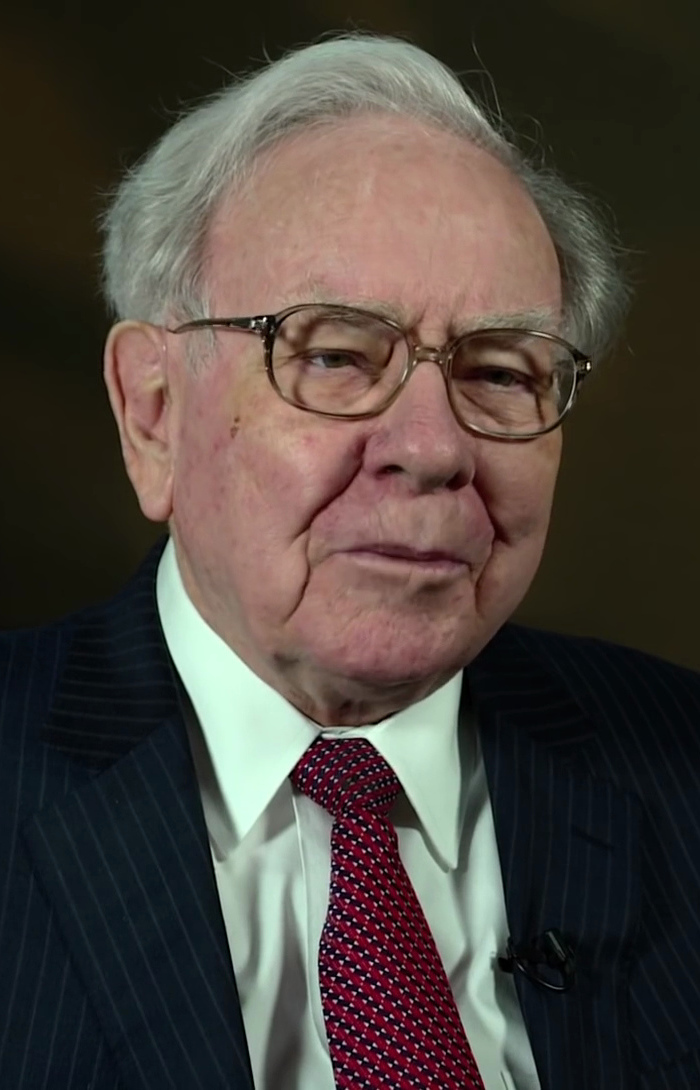
Warren Buffett
The Oracle of Omaha
Quick Answer
What do Warren Buffett’s quotes teach investors?
Warren Buffett’s most important quotes teach investors to buy quality businesses at sensible prices, invest only in what they understand, remain patient during market volatility, and avoid permanent capital loss. His core philosophy is to think like a business owner, ignore short-term market emotion, and allow long-term compounding to build wealth.
Start Here: Plain English Summary
Difficulty: Beginner to Intermediate
Big idea: Buffett teaches that a stock is part ownership of a business. The main lesson is to buy high quality companies at sensible prices, then give compounding enough time to work.
Use this lesson to understand the investor’s core idea first. Then use the examples, vocabulary, and application prompts to turn the idea into a practical investing rule.
A single share of Berkshire Hathaway bought for $19 in 1965 trades today for more than $700,000. The man behind that number is Warren Buffett, widely regarded as the greatest investor of the modern era and one of the most studied minds in business. This lesson sets out his philosophy in full, then closes with 30 of his most consequential quotes, each paired with what it means and how to apply it.
|
~20%
Annualized return
Berkshire book value, 1965 to today |
60
Years at the helm
of compounding at Berkshire Hathaway |
One
Of the world’s
most valuable public companies |
Figures as of May 2026.
Quotes are drawn from Warren Buffett’s books, letters, and public interviews; some are paraphrased to reflect their documented philosophy. Figures are approximate, reflecting publicly reported records.
Key Takeaways
- Buy quality companies at a price below their intrinsic value.
- Invest only in businesses you understand.
- Markets are emotional short term, rational long term.
- Temperament beats raw intelligence.
- Risk is not volatility. Risk is not knowing what you are doing.
The Making of an Investor
Part One
Buffett showed an entrepreneurial instinct from childhood, delivering newspapers, selling chewing gum and Coca Cola door to door, and buying his first stock at age 11. By 15 he was running multiple businesses and had saved enough to buy a 40 acre farm in Nebraska.
At Columbia Business School he studied under Benjamin Graham, absorbing the disciplines of intrinsic value and margin of safety that would shape his entire career. He worked briefly for Graham’s firm, then returned to Omaha and founded Buffett Partnership Ltd in 1956. Over the next 13 years the partnership compounded capital at roughly 30 percent per year, comfortably outperforming the Dow.
In 1965 he took control of Berkshire Hathaway, then a failing textile mill, and redirected its cash flows into insurance and equities. The combination of permanent capital, insurance float, and disciplined allocation, refined over decades alongside his partner Charlie Munger, became the engine of one of the great wealth creation stories in financial history.
Career Milestones
|
1956 |
Founds Buffett Partnership Ltd in Omaha. |
|
1965 |
Takes control of Berkshire Hathaway, then a failing textile mill. |
|
1972 |
Berkshire acquires See’s Candies, a pivot toward business quality. |
|
1988 |
Begins building the Coca-Cola position over 1988–1994. |
|
1996 |
Acquires the remaining 49 percent of GEICO. |
|
2009 |
Acquires BNSF Railway in a $26 billion deal. |
|
2016 |
Begins building what becomes Berkshire’s largest equity holding, Apple. |
Three Mentors
Benjamin Graham taught Buffett to view stocks as fractional ownership of businesses, to estimate intrinsic value from fundamentals, and to demand a margin of safety. Buffett has called Graham’s The Intelligent Investor “by far the best book about investing ever written.”
Philip Fisher shifted his thinking toward business quality, arguing a fair price for an excellent business beats a bargain for a mediocre one. Fisher pioneered “scuttlebutt” research, gathering insight by talking to suppliers, customers, employees, and competitors.
Charlie Munger, Buffett’s lifelong partner and Berkshire’s Vice Chairman until his death in 2023, pushed Buffett toward concentrated positions in genuinely great businesses and brought a multidisciplinary mental models approach. Their partnership is widely considered the greatest intellectual collaboration in modern business.
“Someone is sitting in the shade today because someone planted a tree a long time ago.”
Warren Buffett
Berkshire Hathaway, in Brief
Part Two
Berkshire Hathaway is one of the world’s largest conglomerates. It owns dozens of operating subsidiaries outright and holds a public equity portfolio worth hundreds of billions of dollars.
The engine of the company is its insurance operations, including GEICO, General Re, and Berkshire Hathaway Reinsurance. Insurance generates float, premium dollars held before claims are paid. Buffett invests this float at attractive rates of return, effectively borrowing at negative cost. Float is the structural advantage that has compounded Berkshire’s returns for decades.
Beyond insurance, Berkshire owns BNSF Railway, Berkshire Hathaway Energy, See’s Candies, Dairy Queen, Duracell, Brooks Sports, Fruit of the Loom, Pampered Chef, and many others. Its equity portfolio includes large positions in Apple, Coca Cola, American Express, Bank of America, and Chevron. Subsidiaries operate with substantial autonomy. During Buffett’s tenure as CEO, his central role was capital allocation rather than day-to-day management of the subsidiaries. Greg Abel became Berkshire’s CEO on 1 January 2026, and Buffett continued as chairman, as documented in the 2026 proxy statement.
Part Three
The Framework
Buffett’s investment philosophy reduces to four interlocking principles. Each operates as a filter; only ideas that pass all four deserve capital.
Value Investing
Buy shares trading meaningfully below their intrinsic worth. Focus on businesses with strong fundamentals and predictable economics. Anchor every purchase in a margin of safety, the gap between price and underlying value that protects you when your analysis or the future surprises you.
Circle of Competence
Invest only in industries you genuinely understand. Hold quality businesses while their fundamentals remain strong. Avoid complex products you cannot fully explain. The size of your circle matters less than knowing where its edges are.
Economic Moats
Seek durable competitive advantages that protect profits long term. Moats come from brand power, network effects, scale economies, switching costs, or regulation. A strong moat is what lets a great business compound capital for decades without being competed away.
Risk Management
Risk is not volatility. Risk is committing capital to something you do not understand, or paying too much for what you do understand. Conduct deep primary research, avoid leverage, and refuse opaque or fragile instruments. Survival comes first.
“Risk comes from not knowing what you are doing.”
Warren Buffett
The Vocabulary of Buffett
Part Four
Several ideas appear repeatedly in Buffett’s letters and interviews. Understanding them is essential to reading him correctly.
Intrinsic Value
The cash a business will produce over its remaining life, discounted to present value. Distinct from price, and the only honest yardstick for whether a price is attractive.
Margin of Safety
The discount between intrinsic value and purchase price. Margin of safety protects against mistakes in valuation and against unforeseen risks. Graham called it the central concept of value investing.
Mr. Market
Graham’s metaphor for the stock market: a manic depressive business partner who appears every day with a price at which he will buy your share or sell you his. You are free to take advantage of him, or simply ignore him.
Economic Moat
A durable competitive advantage protecting a business from competition for long periods. Sources include brand, network effects, scale, low cost production, switching costs, and regulation.
Insurance Float
Premium income held by an insurer before claims are paid. Float is effectively interest free borrowed money. Berkshire holds over 150 billion dollars of it, the quiet engine of its compounding advantage.
Owner Earnings
Reported earnings adjusted for non cash items and required capital expenditures. Buffett argues this is a more accurate measure of what a business actually generates for owners than reported net income.
Notable Investments
Part Five
A handful of positions illustrate the philosophy in practice. Each was held for years or decades, anchored in deep understanding of the underlying business.
American Express, 1964
After the salad oil scandal collapsed the share price, Buffett invested 40 percent of his partnership in Amex, recognizing the brand and franchise were unimpaired. The position became one of his earliest spectacular winners.
See’s Candies, 1972
A 25 million dollar purchase that has returned billions in pretax earnings. See’s taught Buffett the power of brand, pricing power, and capital light economics, and reshaped Berkshire toward quality over cheapness.
Coca Cola, 1988
Berkshire built a 1.3 billion dollar position in a globally dominant consumer brand. Still held today and worth more than 20 billion dollars, with cumulative dividends alone exceeding the original cost many times over.
GEICO, 1996
Berkshire acquired the remaining 49 percent of GEICO, after first buying shares in 1951. GEICO’s low cost direct to consumer model and the float it generates became the heart of Berkshire’s insurance operations.
BNSF Railway, 2009
A 26 billion dollar acquisition of one of North America’s largest rail networks, a long term bet on the durability and indispensability of American freight infrastructure.
Apple, 2016
Buffett described Apple as “a consumer brand wearing technology clothing.” It became Berkshire’s largest equity holding, returning more than 100 billion dollars in gains.
“Our favorite holding period is forever.”
Warren Buffett
30 Simple Investor Lessons
Part Six
This section turns Warren Buffett’s best known ideas into simple teaching lines. Some lines are exact quotes from books, letters, interviews, or public talks, while others are carefully rewritten lesson summaries to avoid misquoting or overstating the original wording.
Quote safety note: Treat these as educational principles unless an exact source is checked. This protects StockEducation from using common internet quote wording that may be paraphrased or misattributed.
Market Psychology
Lesson idea Be fearful when others are greedy, and greedy when others are fearful.
Means. Markets run on emotion; quality assets get discounted when fear is widespread.
Apply. Keep a shopping list of companies you want to own and act when markets sell off.
Lesson idea In the short term, the market is a voting machine; in the long term, it is a weighing machine.
Means. Daily prices reflect sentiment; over years they gravitate to underlying earnings power.
Apply. Judge investments by business performance over years, not weekly price moves.
Lesson idea The stock market is a device for transferring money from the impatient to the patient.
Means. Impatience costs investors in fees, taxes, and bad timing; patience collects that value.
Apply. The default action for a quality holding is to do nothing.
Lesson idea The time to get interested in stocks is when no one else is.
Means. Mass enthusiasm is usually a contrary signal; easy returns are gone by the time the crowd notices.
Apply. Be most curious about sectors out of favor, not the ones dominating your feed.
Lesson idea You are neither right nor wrong because the crowd disagrees with you. You are right because your data and reasoning are right.
Means. Investment correctness rests on facts and reasoning, not popularity.
Apply. Write your thesis before buying; revisit only when the facts change.
Value and Price
Lesson idea Price is what you pay; value is what you get.
Means. Price is set by the marginal buyer; value is the cash a business produces over its lifetime.
Apply. Estimate intrinsic value first, then buy only when the gap to price is wide.
Lesson idea It is far better to buy a wonderful company at a fair price than a fair company at a wonderful price.
Means. Great businesses held for decades compound dramatically more wealth than cheap mediocre ones.
Apply. Prioritize return on capital and durable advantage over a low P/E.
Lesson idea Whether socks or stocks, I like buying quality merchandise when it is marked down.
Means. Value investing is quality bought at a discount, not cheap rubbish.
Apply. Build a watchlist of companies you would happily own, then wait for the markdown.
Lesson idea The most common cause of low prices is pessimism.
Means. Bargains rarely show up in cheerful conditions; the bad news that creates them also scares buyers off.
Apply. When you feel reluctant to buy something still fundamentally strong, pay attention.
Long Term Thinking
Lesson idea Our favorite holding period is forever.
Means. Long holding minimizes taxes and transaction costs and lets compounding work uninterrupted.
Apply. Ask before buying: would I be content to hold this if the market closed for ten years?
Lesson idea If you aren’t willing to own a stock for ten years, do not think about owning it for ten minutes.
Means. Without decade level commitment, you are speculating about price, not investing in a business.
Apply. Write a one page thesis on why you would hold for ten years. If you can’t, pass.
Lesson idea Someone is sitting in the shade today because someone planted a tree a long time ago.
Means. Compounding is invisible until late; most of Buffett’s wealth was generated after his 60th birthday.
Apply. Automate regular investing into quality assets. Time, not timing, does the heavy lifting.
Lesson idea The stock market is a no called strike game. You can wait for your pitch.
Means. Investors face no penalty for passing on opportunities. Patience itself is an edge.
Apply. Allow yourself to do nothing. Cash is a position.
Lesson idea I buy on the assumption they could close the market the next day and not reopen it for five years.
Means. Stocks are fractional ownership of real businesses, not symbols to trade.
Apply. Evaluate every investment as if you were buying the entire company privately.
Lesson idea Time is the friend of the wonderful business; it is the enemy of the mediocre.
Means. Great businesses widen their moats over time; weak ones erode.
Apply. Be very selective about what you commit to holding long term.
Temperament and Discipline
Lesson idea The most important quality for an investor is temperament, not intellect.
Means. Investing rewards self control more than IQ; smart people lose when they cannot tolerate volatility or envy.
Apply. Work on emotional discipline as deliberately as analysis.
Lesson idea What you need is the temperament to control the urges that get other people into trouble.
Means. Chasing winners, panic selling, and leveraging into bubbles are emotional failures.
Apply. Before any major decision, pause 24 hours and ask whether you are responding to evidence or emotion.
Lesson idea Risk comes from not knowing what you are doing.
Means. Real risk is committing capital to something you do not understand. A falling price is opportunity, not risk.
Apply. If you cannot explain a business in a few clear sentences, you do not understand it well enough to own it.
Lesson idea It takes 20 years to build a reputation and five minutes to ruin it.
Means. Reputation is slow to build, fast to destroy. The compounding of trust is the most valuable kind.
Apply. Would I be comfortable seeing this decision on the front page of a newspaper with my name attached?
Lesson idea Honesty is a very expensive gift. Do not expect it from cheap people.
Means. Genuine honesty costs the speaker comfort; people unwilling to pay any cost rarely tell you the truth.
Apply. Build your network around people who tell you uncomfortable truths.
Knowledge and Mental Models
Lesson idea Never invest in a business you cannot understand.
Means. Without understanding how a business earns and what could destroy it, you are speculating.
Apply. Define your circle of competence honestly and narrowly; expand it deliberately.
Lesson idea Read 500 pages every day. That is how knowledge works. It builds up, like compound interest.
Means. Reading is to thinking what saving is to wealth. Small daily additions become a vast advantage.
Apply. Build a daily reading practice. Annual reports and business histories yield the most.
Lesson idea The best investment you can make is in yourself.
Means. Skills and knowledge follow you through every cycle. Inflation cannot erode them.
Apply. Spend on learning before status. The return is enormous and lifelong.
Lesson idea Forecasts may tell you a great deal about the forecaster; they tell you nothing about the future.
Means. The system is too complex for confident prediction; forecasts enrich the forecaster.
Apply. Build a strategy that does not require predicting the next twelve months.
Lesson idea Wide diversification is only required when investors do not understand what they are doing.
Means. Diversification is a defense against ignorance; deep understanding allows rational concentration.
Apply. Go concentrated with deep knowledge, or go broad and passive. Avoid half measures.
Risk, Reputation and Rules
Lesson idea Rule No. 1: Never lose money. Rule No. 2: Never forget Rule No. 1.
Means. Capital preservation precedes return. A 50 percent loss needs a 100 percent gain to recover.
Apply. Ask ‘what is my downside?’ before ‘what is my upside?’ Always.
Lesson idea Only when the tide goes out do you discover who has been swimming naked.
Means. Bull markets disguise weakness; recessions strip the camouflage.
Apply. Stress test every holding against a downturn, credit freeze, or sustained high interest rates.
Lesson idea In a chronically leaking boat, energy devoted to changing vessels is more productive than energy devoted to patching leaks.
Means. Some businesses are structurally broken; more effort is sunk cost thinking.
Apply. If a holding would not be a buy today on current merits, it is probably a sell.
Lesson idea Beware of geeks bearing formulas.
Means. Quantitative models give false precision; their assumptions shatter in crises.
Apply. Trust simple conservative reasoning over complex optimized models.
Lesson idea You only have to do a few things right in your life, so long as you don’t do too many things wrong.
Means. Lifetime returns rest on a small number of outstanding decisions and the discipline to avoid catastrophic ones.
Apply. Concentrate effort on high quality decisions; spend equal energy avoiding ruin.
In Closing
Final Reflections
Great investing is great discipline applied across great spans of time. Buffett’s edge is not information no one else has. It is a habit of mind almost no one else maintains.
He invests within his circle of competence. He buys businesses, not tickers. He demands a margin of safety. He waits for the right pitch, then he holds, often forever. He keeps his lifestyle modest, his integrity expensive, and his expectations honest.
You will not become Warren Buffett by reading this lesson. But you can import his framework, internalize his temperament, and let compounding, of knowledge, capital, and character, do its quiet decades long work on your behalf.
Five Commitments for the Disciplined Investor
- Define and respect your circle of competence, in writing.
- Estimate intrinsic value before checking the current price.
- Require a margin of safety on every purchase.
- Decide once, hold long, review rationally.
- Invest as much in your knowledge and character as in any asset.
Sources and Quote Verification Notes
Sources Used for This Lesson
Editorial verification note. Investor quotations are risky because many popular lines online are paraphrased, shortened, or misattributed. To reduce that risk, this lesson now treats the quote section as teaching lines and investor lessons, not a list of guaranteed verbatim quotes unless a direct source is provided.
Before using any line in ads, social posts, printed material, or legal/compliance-sensitive pages, verify the exact wording against the primary source below.
- Berkshire Hathaway shareholder letters
- Berkshire Hathaway annual reports
- The Essays of Warren Buffett, edited by Lawrence A. Cunningham
- Warren Buffett: The Superinvestors of Graham-and-Doddsville
- The Snowball by Alice Schroeder
This lesson is for general financial education only. It does not provide personal financial advice, stock recommendations, or a guarantee of investment results.


