
Free course · 14 min read
Carl Icahn
Carl Icahn buys large stakes in companies he considers undervalued or badly run, then uses his votes and public pressure to force changes.
Written by the StockEducation Editorial Team · Reviewed by Associate Professor Charles Lo, CPA, PhD · Updated · How we check lessons

What is Carl Icahn’s investment philosophy?
Carl Icahn’s investment philosophy is to buy substantial stakes in undervalued or poorly managed companies and use shareholder influence to unlock value. He focuses on assets trading below their underlying worth, weak capital allocation and ineffective boards, then pushes for specific changes such as buybacks, asset sales, spinoffs, management replacement or board representation.
Key takeaways
- Icahn builds large stakes in companies he believes trade below the value of their assets or businesses.
- He pushes for specific changes, such as buybacks, asset sales, spinoffs, new directors or a new chief executive.
- His campaigns often become long public fights, waged through proxy contests and open letters, and several have failed.
- Pressure can run the other way too: in 2024 he and Icahn Enterprises settled SEC charges over undisclosed pledges of its units for his personal loans.
- Owning a few shares gives an ordinary investor no such influence, so copying an activist means taking the risk without the control.
Start the lessonTake the quick checkRead the FAQSee the sources
Part 1 of 7 · Activism in brief
Who is Carl Icahn?
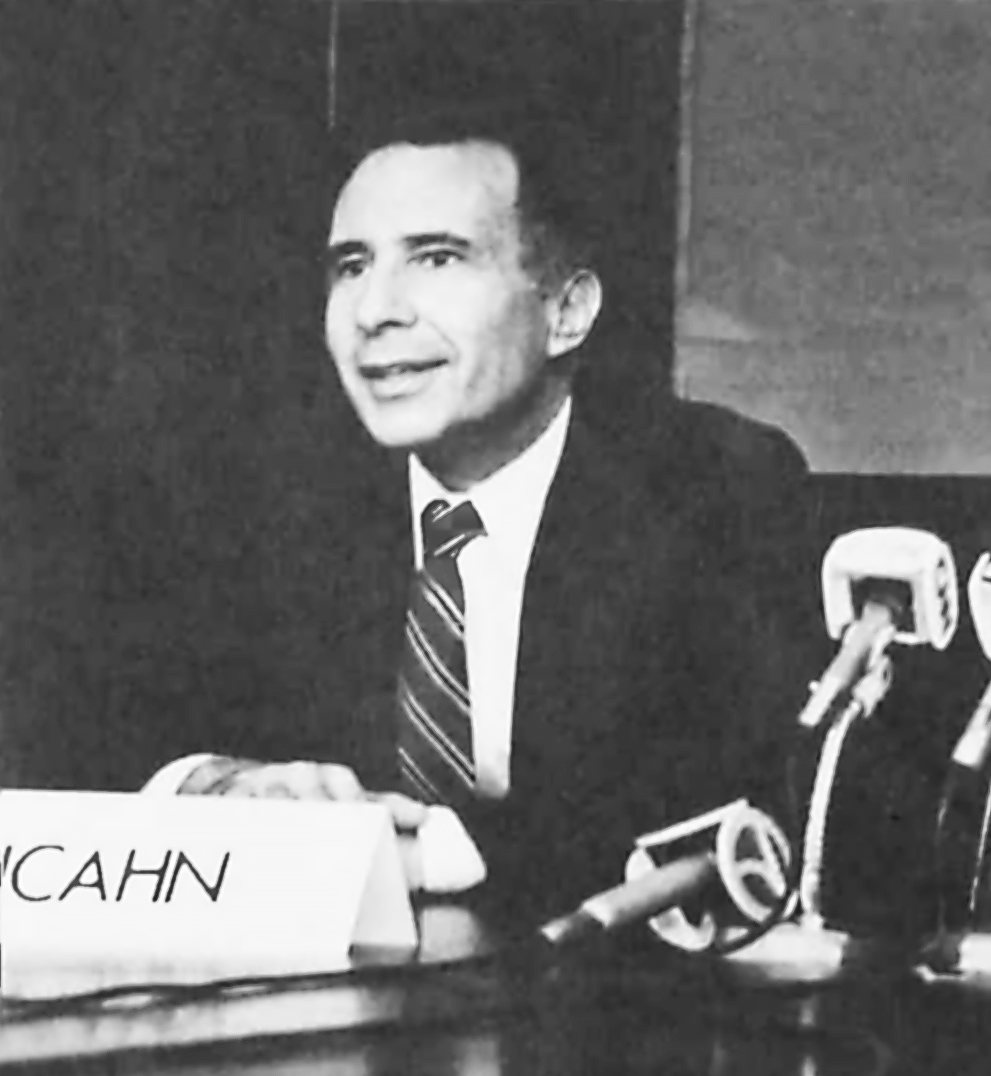
Carl Icahn is one of the best known activist investors of the past half century. An activist buys a large stake in a public company and uses the votes and attention that come with it to push for change. Over a five decade career, Icahn has done this at dozens of major companies, forcing spinoffs, buybacks, sales and new management.
His campaigns helped make shareholder activism a familiar part of American corporate life. They also show its costs: long public fights, lost votes and deals that went badly. The main lesson for you is that ownership carries power, and that the case for change has to be specific.
An activist's power comes from votes and attention, and both come from owning a large stake.
Part 2 of 7 · From Queens to Wall Street
How did Icahn get his start?
Carl Celian Icahn was born in 1936 in Brooklyn and grew up in Far Rockaway, Queens.1 His father was a cantor and teacher, and his mother was a schoolteacher. He earned a philosophy degree from Princeton in 1957, then briefly attended NYU medical school before dropping out.
After military service, he became a stockbroker in 1961 and learned options trading and arbitrage.2 He founded Icahn & Company in 1968; CNN reports that his uncle, M. Elliot Schnall, lent him $400,000 to buy a seat on the New York Stock Exchange.2 The firm specialized in options arbitrage and special situations, building the capital that would fund his later campaigns.2
In the late 1970s and 1980s he became one of the best known corporate raiders, taking large positions in undervalued companies and forcing change through proxy battles, tender offers and loud public campaigns. That era of raiders, junk bond financing and proxy fights gave him the playbook he would refine for the next forty years.
Carl Icahn in six dates
- 1936BornBrooklyn; grows up in Far Rockaway, Queens.
- 1957PrincetonEarns a philosophy degree.
- 1961StockbrokerLearns options trading and arbitrage after military service.
- 1968Icahn and CompanyFounded with a $400,000 loan from his uncle.
- 1980ActivistThe year Icahn Enterprises says he became an activist investor.
- 1985TWAWins control of the airline and becomes a national figure.
His habit of buying companies whose assets look worth more than their share price fits the value tradition Benjamin Graham founded. Icahn adds the pressure of an owner who will not sit quietly.
Icahn built his capital in options arbitrage through the 1960s and 1970s before he could afford to buy influence.
Part 3 of 7 · Four principles
What is Icahn’s activist playbook?
His method has stayed remarkably consistent across decades.3 It rests on four principles.
- Buy undervalued assets. Look for companies whose assets or separate businesses are worth far more than the share price implies. That gap is what activism tries to close.
- Engage aggressively. Once the stake is built, go public. In Icahn’s view, many companies will not change without outside pressure.4
- Demand specific change. General complaints achieve nothing. A spinoff, a sale, a buyback or board seats force the board to decide.
- Tolerate conflict. Campaigns bring lawsuits, lost votes and personal criticism. An investor who cannot stand that cannot run the strategy.
The Icahn playbook in six steps
- Find the gapAssets look worth more than the share price.
- Build quietlyAccumulate a large stake before announcing it.
- Go publicDisclose the stake with a critique of management.
- Demand specificsBoard seats, a spinoff, an asset sale or a buyback.
- EscalateA proxy contest, a lawsuit or more public letters.
- ExitSell once value is realized, or once the case fails.
“For the past 40 years I have worked diligently to see that errant CEOs and boards were held accountable.”
Carl Icahn, letter to members of Congress, October 20, 2015
That letter, published on his own site, is the clearest statement of how he sees the job.5
The words you need to follow an activist fight
Undermanaged companies. Icahn’s preferred targets: businesses with valuable assets but ineffective management or boards. The opportunity is to replace or reform leadership.
Sum of the parts. Value each business separately and add them up. If the total beats the company’s market value, a breakup, spinoff or asset sale may unlock the gap.
Board representation. Seats on the board, won by agreement or by vote, give the activist a direct say over capital allocation and management.
Proxy contests. Public fights for shareholder votes to elect alternative directors. Icahn has run many and lost some, including at Motorola in 2007.6 The threat of one often wins concessions before it starts.
Buybacks and dividends. Icahn often pushes companies to return excess cash, which forces management to justify keeping it.
The playbook is four moves: find assets worth more than the share price, build a stake, demand one specific change, and outlast the fight.
Part 4 of 7 · Notable campaigns
Which campaigns show the playbook at work?
Icahn’s targets have included TWA, USX, RJR Nabisco, Time Warner, Motorola, Yahoo, Apple, eBay, Netflix and Herbalife. The results vary, and several campaigns fell short. Here is what a handful asked for and what happened.
What six campaigns asked for, and what happened
- Apple, 2013
- Buybacks raised; about $2 billion profit
- Motorola, 2007
- Lost the vote, split followed, Google paid a 63% premium
- Time Warner, 2005
- No breakup; $20 billion buyback, two new directors
- TWA, 1985
- Bankrupt in 1992
- RJR Nabisco, 1995
- Lost a 1996 vote; split announced in 1999
- Hertz, 2020
- Sold 39% at a $2 billion loss
TWA, 1985
Icahn won control of Trans World Airlines in 1985 and took it private in 1988. TWA went bankrupt in 1992, and Icahn resigned as chairman in 1993, so the deal remains one of his most criticized.7
RJR Nabisco, 1995 to 1999
In 1995 Icahn and Bennett LeBow began pressing RJR Nabisco to split its tobacco and food businesses. They lost a 1996 proxy fight, but Icahn kept pushing, and in 1999 the company announced it would separate the two.
Time Warner, 2005
Icahn pushed for a breakup and a large buyback. In February 2006 the two sides settled: Time Warner stayed intact, agreed to a $20 billion buyback and added two independent directors.7
Motorola, 2007
Icahn lost a 2007 proxy fight for a board seat. In 2008 the company backed two of his nominees and announced plans to split off its handset business. In 2011 Google agreed to buy Motorola Mobility for $40 a share, a 63% premium to its prior close.
Apple and Netflix, 2013
Icahn disclosed a large Apple stake in August 2013, calling the company extremely undervalued, and campaigned for larger buybacks. In April 2014 Apple lifted its repurchase authorization to $90 billion from $60 billion, and in April 2016 Icahn said he had sold the stake for a profit of about $2 billion. The same October he sold more than half his Netflix stake for a gain of more than $800 million.7
Herbalife, from 2013
Icahn built a large Herbalife stake in 2013, taking the other side of Bill Ackman’s public short. In 2016 Herbalife settled Federal Trade Commission charges by agreeing to restructure its business and pay $200 million, but it was not shut down. In 2021 it agreed to buy back about $600 million of shares from Icahn.
Hertz, 2020
Not every big stake works. In May 2020 Icahn sold his 39% of Hertz at a $2 billion loss after the rental car company filed for bankruptcy.7
Three reported outcomes, in billions of dollars: Apple, Netflix and Hertz
Icahn's record runs from a $2 billion profit at Apple to a $2 billion loss at Hertz, and both came from the same method.
Part 5 of 7 · The holding company
How does Icahn Enterprises work, and what went wrong there?
Icahn Enterprises is the publicly traded partnership that Icahn chairs. He and his affiliates owned about 86% of its units at the end of 2025, and public unitholders invest alongside him. Its 2025 annual report lists seven segments: investment, energy, automotive, food packaging, real estate, home fashion and pharma.
Pressure can run the other way too. Icahn Enterprises units fell sharply in 2023 after a short seller’s report questioned the partnership. In August 2024 the SEC found that Icahn had pledged roughly 51% to 82% of the partnership’s outstanding units as collateral for personal margin loans worth billions of dollars, and that the partnership had not disclosed this in its annual reports until February 2022.8
Both settled without admitting or denying the findings. The partnership paid a $1.5 million penalty and Icahn paid $500,000.8 For outside investors, the point is concrete: if a controlling owner’s lenders call his loans, they can force sales of the very units you hold.
Icahn Enterprises units: owned by Icahn, and pledged for his personal loans
A controlling owner's margin loans are a risk to every other holder, because a lender's call can force sales of the shares you own.
Part 6 of 7 · Simple investor lessons
What can you learn from Icahn without his money?
Each card pairs one of Icahn's documented views with what it means. The ideas restate his views in our own words unless quoted.
Quote
“For the past 40 years I have worked diligently to see that errant CEOs and boards were held accountable.”
Source: Carl Icahn, letter to members of Congress, October 20, 2015
Means. He frames activism as a service to all shareholders, himself included. Whether a given campaign served them is a question the outcomes above answer case by case.
Boards and pay
Lesson idea
Icahn argues that many companies underperform because their boards fail to hold management to account.
Means. In a 2009 ABC News interview he said many boards were not doing their job and that shareholders paid the price. A proxy statement shows how long each director has served and any ties to the chief executive, which is where that claim can be tested for any company.
Lesson idea
Icahn has argued that CEO succession can reward safe loyalty over ability, a pattern he calls survival of the unfittest.
Means. In 2009 he told ABC News that many CEOs avoid promoting deputies who are brighter than they are. The check is a new chief executive's record running a business before the promotion.
Lesson idea
Icahn has criticized large pay for chief executives of companies that underperform.
Means. In 2009 he told ABC News that such pay was absurd. A proxy statement lets anyone compare the chief executive's total pay over three years with the stock's return over the same period.
Value, patience and the specific case
Lesson idea
Icahn often argues that a company's separate businesses would be worth more apart than together.
Means. He pressed Motorola to split off its handset business; Google later agreed to buy Motorola Mobility for about $12.5 billion. A sum of the parts argument starts with each division's revenue and profit from the annual report.
Lesson idea
Icahn's campaigns often take years to play out.
Means. He disclosed a large Apple stake in August 2013 and said in April 2016 that he had sold it. RJR Nabisco took from 1995 to 1999 and included a lost vote. A campaign's first headline rarely describes its result.
Lesson idea
Icahn has often taken the unpopular side of a trade, as when he bought Herbalife while Bill Ackman was publicly betting against it.
Means. A contrarian position pays only if the crowd is wrong for reasons that can be identified and checked. Herbalife paid a $200 million settlement and kept operating, which was enough for the long side to win.
Pressure from outside
Lesson idea
Icahn argues that change at underperforming companies often needs pressure from outside.
Means. His 2015 letter to AIG's CEO said an external force is often still required to bring change, even when the data point one way. Proxy contests are the formal version of that force; he has won some and lost others, including a 2007 bid for a Motorola board seat.
Try the research exercise
Pick one activist proposal in the news. Write down the action requested, the votes or approvals required and who would receive the resulting cash or assets. Then list the costs and the credible reasons it might fail.
Keep the limits visible. A proposal is not an accomplished change. Other shareholders may disagree, and the final outcome can differ from the first plan.
An activist proposal is a plan, and it becomes a result only after the votes and approvals it needs.
Part 7 of 7 · Legacy
What is Icahn’s legacy?
Icahn helped define activist investing in the modern era. Across five decades and dozens of campaigns, he has shown that an engaged owner can force changes at undervalued, poorly run companies, though results have varied and several campaigns failed.
His style is hard to copy: aggressive, public, contentious and patient over years. Most investors lack the capital, the stomach or the temperament for it. Owning a few shares gives you no such influence, so copying an activist means taking the risk without the control.
The principles travel better: buy undervalued assets, engage management directly, demand specific change. Many activist funds now use versions of the playbook he helped popularize. Icahn, born in 1936, remained chairman of Icahn Enterprises in 2026, with the 2024 SEC settlement on his record.
The questions an activist asks travel to any portfolio; the concentrated bets and the proxy fights do not.
Quick check
Quick quiz: test what you just read
Pick an answer to see why it is right. 5 questions, no account needed.
1. What does an activist investor do?
2. What happened at Apple after Icahn disclosed his stake in August 2013?
3. Which campaign ended in bankruptcy and a $2 billion loss for Icahn in 2020?
4. What did the SEC find in its 2024 settlement with Icahn and Icahn Enterprises?
5. What does a sum of the parts analysis do?
Questions people ask
Carl Icahn FAQ
What is activist investing?
Activist investing means buying a large stake in a public company and using that ownership to push management or the board for change. Typical demands include buybacks, asset sales, spinoffs, a sale of the company, new management or board seats. Activists usually target companies they believe are undervalued because of weak management or poor capital allocation.4
What is a proxy fight?
A proxy fight, or proxy contest, is a campaign to win shareholder votes, usually to replace some directors with the activist’s own candidates. Because most shareholders vote by proxy rather than in person, the activist and the company compete for those votes.
What does sum of the parts mean?
A sum of the parts analysis values each business or major asset of a company separately and adds them up. If that total is worth more than the company’s market value, the market may be undervaluing the pieces. Icahn often uses this argument to push for breakups, spinoffs or asset sales.
Can ordinary investors copy Carl Icahn?
Not directly. His approach depends on owning large stakes, enduring public conflict and lawsuits, and staying patient for years. What transfers is the thinking: look for assets worth more than the market implies, ask whether management is using them well, and treat any proposed change as a plan that still needs votes and approvals.
What kinds of companies does Icahn target?
Undermanaged companies: businesses with valuable assets but ineffective management or boards. He looks for a wide gap between the share price and what the underlying assets or separate businesses are worth.
You finished this lesson.
You now have the main ideas from this lesson. Next, practice where mistakes cost nothing: a free account saves your progress and unlocks the practice simulator with virtual money.
Free, no card. Lessons stay free to read without an account.
Your notes on one card, and what comes next
- Step 1 · DoneCarl Icahn
See your notes on one card
- Icahn builds large stakes in companies he believes trade below the value of their assets or businesses.
- He pushes for specific changes, such as buybacks, asset sales, spinoffs, new directors or a new chief executive.
- His campaigns often become long public fights, waged through proxy contests and open letters, and several have failed.
- Pressure can run the other way too: in 2024 he and Icahn Enterprises settled SEC charges over undisclosed pledges of its units for his personal loans.
- Owning a few shares gives an ordinary investor no such influence, so copying an activist means taking the risk without the control.
- 2Step 2 · NowSave your progress with a free account
Keep your course progress and practice on real U.S. stocks with virtual cash.
Create your free account No card needed. Lessons stay free to read. - 3Step 3Follow the learning pathThe learning pathFree
Learn the rest in the right order
Ten modules of lessons, videos, tools and quizzes, ordered so each step builds on the last, from market basics to company analysis and risk.
Start the learning path
Want the full sequence? See the course outline →
Sources and assumptions
- dailyprincetonian.com: Carl icahn 57 wall street guru
- CNN Editorial Research: Carl Icahn Fast Facts (via KRDO, January 27, 2022)
- ielp.com: A5d6dde9 3909 48db bf35 28c21e788151
- Carl Icahn: letter to AIG CEO Peter Hancock (October 28, 2015), carlicahn.com
- Carl Icahn: letter to members of Congress (October 20, 2015), carlicahn.com
- nbcnews.com: Wbna23994647
- kvia.com: Carl icahn fast facts 3
- SEC press release 2024-99: Carl Icahn and Icahn Enterprises settle charges over undisclosed pledges, August 19, 2024
- Icahn Enterprises annual reports and investor materials
- SEC EDGAR filings for Icahn Enterprises and related entities
- King Icahn by Mark Stevens
- Public shareholder letters and activist filings
- Corporate governance and activist investing context
- money.cnn.com: Rjr pkg
- apple.com: 23Apple Expands Capital Return Program to Over 130 Billion
- ftc.gov: 160715herbalifestatement
- ielp.com: Icahn enterprises lp nasdaq iep today announced its second 2
This lesson is for general financial education only. It does not provide personal financial advice, stock recommendations, or a guarantee of investment results.
StockEducation provides general education, not personal financial, tax or legal advice. Companies and funds named here are teaching examples only. Nothing here recommends buying or selling any security. Investing involves risk, including the loss of money you invest.


