
Investor Masterclass
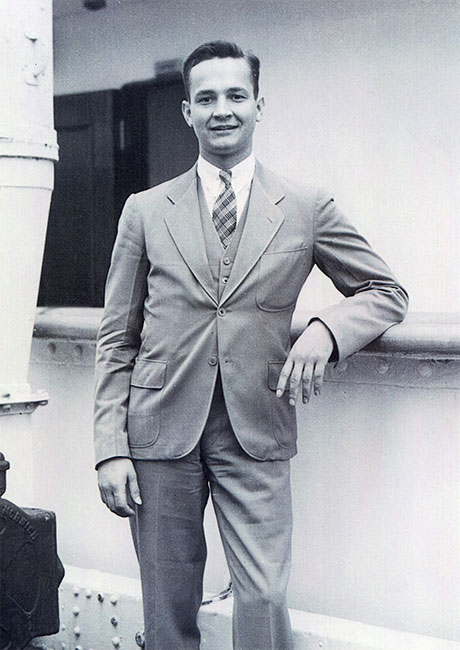
John Templeton
The Global Bargain Hunter
Quick Answer
What do John Templeton’s ideas teach investors?
John Templeton’s ideas teach investors to hunt for bargains where pessimism is deepest and to search the whole world rather than one home market. He bought 104 stocks priced at $1 or less as war began in 1939, then built the Templeton Growth Fund, launched November 29, 1954, around global stock picking. The style demands research, patience and wide diversification.
Start Here: The Short Version
Difficulty: Beginner to Intermediate
Big idea: Templeton teaches that the best bargains usually appear when pessimism is deepest, and that a worldwide search turns up far more of them.
Use this lesson to understand the investor’s core idea first. Then use the examples, vocabulary, and application prompts to turn the idea into a practical investing rule.
Sir John Templeton was a Tennessee born fund manager whom Money magazine called a pioneer of foreign investing. This page explains his idea of maximum pessimism, how his growth fund searched across countries, and where the style carries real risks. Read it as a lesson in method and temperament rather than a list of trades to copy.
|
1954
Year he launched the Templeton Growth Fund
Inception date November 29, 1954, per Franklin Templeton
|
$2 million
Value by 1992 of $10,000 invested at the fund’s start
Class A shares with dividends reinvested, as reported by the John Templeton Foundation
|
104
Companies he bought 100 shares each of in 1939
All at $1 a share or less, per the John Templeton Foundation; other accounts differ
|
Figures as of September 2026.
Lesson ideas on this page are teaching lines written by our editors from John Templeton’s published work and public interviews; they are not direct quotes. Figures reflect publicly reported records.
Key Takeaways
- Bargains tend to appear when pessimism is deepest, which is exactly when buying feels hardest.
- Prices can keep falling after you buy, so contrarian investing needs patience and money you will not need soon.
- Searching the whole world gives you more choices than one home market, with extra currency and political risks.
- A low price means little until you compare it with a careful estimate of value.
- Leaving a market when eager buyers crowd in matters as much as arriving early.
- Wide diversification let Templeton survive the bets that failed, such as four worthless stocks in 1939.
- Check the period, the measure and the fees behind any famous return figure.
From Winchester to Nassau
John Marks Templeton was born on November 29, 1912, in Winchester, a small town in Tennessee. Like his brother, he went to Yale. He paid his own way through the Depression years and finished in 1934 near the top of his class. A Rhodes Scholarship then took him to Balliol College, Oxford, where he earned a law degree in 1936.
Templeton began his Wall Street career in 1938, according to the John Templeton Foundation. In 1939, as war started in Europe, he borrowed to buy 100 shares in each of 104 companies trading at $1 or less. Of those, 34 were in bankruptcy. The foundation reports that just four ended up worthless and that the others produced large profits.
In 1954 he launched the Templeton Growth Fund, which searched for bargains across countries rather than in one market. He later settled in Nassau in the Bahamas, moving there in the late 1960s, and took British citizenship through naturalization. He ran his investment business from there and sold it to Franklin Resources in 1992.
Philanthropy became a second career. He created the Templeton Prize in 1972 and made its award larger than a Nobel Prize, then founded the John Templeton Foundation in 1987. Queen Elizabeth II also knighted him in 1987 for his philanthropy, which is why he is known as Sir John. He died in Nassau on July 8, 2008, at age 95.
Career Milestones
1912 | Born on November 29 in Winchester, Tennessee. |
1939 | Borrows money to buy 100 shares each in 104 companies priced at $1 or less as war begins in Europe. |
1954 | Launches the Templeton Growth Fund, with an inception date of November 29. |
1972 | Creates the Templeton Prize; Mother Teresa receives the first award in 1973. |
1987 | Made a Knight Bachelor by Queen Elizabeth II and founds the John Templeton Foundation. |
1992 | Franklin Resources agrees to buy his Templeton funds business; UPI reported $913 million, and other accounts give a lower figure. |
Three Influences
The Great Depression Templeton supported himself at Yale during the Depression and graduated in 1934, according to the John Templeton Foundation. That decade showed his generation how far prices and confidence could fall, and how long gloom could last. The foundation does not draw a direct line to his later style. Still, his career rested on one related idea: deep gloom can push prices well below value.
Oxford and the Rhodes Scholarship As a Rhodes Scholar, Templeton studied law at Balliol College, Oxford, and graduated in 1936. For a young man from small town Tennessee, it meant living and studying outside the United States in his early twenties. His later funds were built on looking past a single country. This early time abroad is a reminder that a wider view is something an investor can build.
Distance from Wall Street In the late 1960s Templeton moved to Nassau in the Bahamas, far from the trading floors of New York. MoneyWeek describes a routine built on distance. Each morning he read a copy of the Financial Times that reached him a day or two late, then made his decisions. The magazine presents that gap from the daily news as part of his edge, not a handicap.
Templeton’s career suggests that deep fear and low prices tend to arrive together, and that one country is too small a hunting ground.
The lesson in one line
The Templeton Growth Fund and the Global Search
Templeton entered the mutual fund business with the Templeton Growth Fund, whose inception date is November 29, 1954. Money magazine called him a pioneer of foreign investing, and the fund hunted for bargains across countries rather than in one market. Franklin Templeton now describes its goal as long term growth from companies located anywhere in the world, including developing markets.
The record under Templeton was strong. By the foundation’s count, a $10,000 stake in Class A shares at the start, with dividends reinvested, would have become $2 million by 1992. Money magazine described those 38 years as returns of 15% a year. It also reported that from 1969 to 1974, when many stocks fell 70%, the fund gained 50% while largely invested in Japan and Canada. The S&P 500 itself fell 48.2% from its January 11, 1973 close to its October 3, 1974 low, in our Stock Market Crash History data (Yardeni closes, read September 2026).
In July 1992 Franklin Resources agreed to buy Templeton, Galbraith & Hansberger for $913 million, UPI reported; a later obituary gave a lower price. Templeton stayed on as chairman of the Templeton mutual funds. The fund still runs under Franklin Templeton, which reports average annual total returns of 11.25% since inception through September 30, 2026, after fund expenses and with distributions reinvested, but before sales charges. For the latest 10 years of that span, long after Templeton sold, the figure is 6.92%. These Class A figures are dated September 30, 2026; they do not isolate Templeton’s own management or predict a future return.
The Framework
Templeton’s approach rests on a small number of principles. These four do most of the work.
Buy where pessimism peaks
Templeton’s central idea was that prices are often lowest when gloom is deepest, a point he called maximum pessimism. The John Templeton Foundation says he applied it to whole countries and industries as well as single companies. This is a valuation hypothesis, not a way to identify a market bottom in advance. Further losses or new information can make a depressed price justified. The hard part is acting while the news still feels terrible, knowing that some cheap assets never recover.
Search the whole world
A bargain in another country is still a bargain. Templeton built his fund to own companies anywhere, which gave him somewhere to go when one market looked expensive. Money magazine reported that in 1968, as the US market surged, he was heavily underweight US stocks. A global search widens your choices, but it adds currency swings, political risk and different accounting rules to understand.
Let price and value decide
A bargain, in Templeton’s approach, was a number rather than a feeling. Money magazine reported that he bought Japanese stocks when many traded at about three times earnings. By 1980, as eager buyers arrived, the same yardstick had led him to sell almost all of them. For a beginner, the habit is easy to state and hard to keep: estimate value first, then look at the price.
Worked example: a lower price can have a higher P/E. Use a hypothetical stock priced at $20 with comparable annual EPS of $2: P/E is 10. Its price then falls 40% to $12, but EPS falls to $0.60. P/E becomes 20. The share is cheaper in dollars, yet the price per dollar of earnings is twice as high. This does not prove either price is fair; debt, cash flow, future earnings and the reporting basis still need research.
Worked example: currency can offset local gains. A hypothetical unhedged foreign holding gains 10% in its own currency while that currency loses 10% against your reporting currency. Before fees and taxes, the combined return is 1.10 × 0.90 − 1 = −1%. A domestic company may also have foreign business exposure, and adding countries cannot guarantee protection in a shared global downturn.
Diversify for the mistakes you will make
His 1939 basket held 104 companies, and four of them became worthless, according to the John Templeton Foundation. Spreading money across many cheap stocks meant no single failure could sink the whole bet. He also used borrowed money, which magnifies losses and does not suit beginners. The lasting lesson is breadth: own enough different holdings, across industries and countries, that one mistake hurts without ending your plan.
The Templeton Vocabulary
A small set of terms runs through Templeton’s work. Learn these six and the rest of this page is easier to follow.
Maximum pessimism
Templeton’s name for the point when gloom about a market, industry or company is at its most extreme. His view was that prices are often lowest then, because most worried sellers have already sold. A supposed low point can only be identified afterward; further bad news may produce a lower price. In practice the idea calls for research under uncertainty, not assuming that widespread fear proves a bargain.
Home bias
The habit of keeping most of your money in your own country’s stocks because they feel familiar. It ties your results to one economy, one currency and one set of government policies. Templeton’s career was built on looking past that habit and comparing bargains across countries.
Global diversification
Spreading investments across countries as well as across companies and industries. When one market is expensive or struggling, another may be cheap or growing. It can reduce the damage any single economy does to a portfolio, though it adds currency swings and differences in accounting and investor protection.
Price to earnings ratio
A stock’s price divided by its earnings per share over a year. A ratio of 3 means paying $3 for each $1 of yearly profit. Money magazine reported that many Japanese stocks traded near that level when Templeton saw Japan as the world’s cheapest market. A low ratio can point to a bargain or to shrinking profits.
Total return
The full result of an investment, counting price changes plus income such as dividends, usually assuming the income is reinvested. The foundation’s figure of $10,000 growing to $2 million by 1992 is a total return with dividends reinvested. Always check whether a record is shown before or after fees and sales charges.
Short selling
Borrowing shares, selling them, and hoping to buy them back later at a lower price. Losses have no fixed limit if the price keeps rising. MoneyWeek reported that Templeton shorted more than 80 Nasdaq stocks in January 2000. He timed the trades for when insiders would first be free to sell after IPO lockups ended.
Notable Decisions
These six moments show the approach in practice, including the setbacks as well as the successes.
Stocks under $1, 1939
As war began in Europe, Templeton borrowed to buy 100 shares each in 104 companies priced at $1 or less. The John Templeton Foundation, which gives that account, says 34 were in bankruptcy, only four became worthless, and the rest made large profits. Money magazine gave different details: $100 put into each stock, $10,000 borrowed, and 37 bankruptcies. Either way, the basket paired courage with breadth, and borrowing to invest is a risk most beginners should avoid.
Avoiding US stocks, 1968
Money magazine reported that Templeton kept his US holdings unusually light in 1968, even as the US market surged. Many stocks then fell 70% between 1969 and 1974, while his fund, largely invested in Japan and Canada, returned 50% over those years. Standing aside from a rising home market can look foolish for a while. A global mandate gave him somewhere else to go besides cash.
Japanese stocks, to 1980
Money magazine reported that Templeton saw Japan as the world’s cheapest market as early as the 1950s (other accounts date his fund’s first Japanese purchases to the 1960s), with many stocks at about three times earnings. He bought companies such as Hitachi and Fuji Film, and at one point had 60% of his fund’s assets in Japan. By 1980, as eager investors crowded in, he had sold almost all of it after making about five times his money. Knowing when to leave mattered as much as knowing when to arrive.
Moving to Nassau, late 1960s
Templeton settled in Nassau in the Bahamas in the late 1960s and became a British citizen, the foundation says. MoneyWeek gives two reasons for the move: to get away from Wall Street’s noise and to cut his tax bill. That choice has drawn critical coverage: Forbes in 2005 listed him among wealthy people who escaped US income and estate taxes by renouncing citizenship. Accounts differ on the year he gave up US citizenship.
Selling to Franklin Resources, 1992
In July 1992 Franklin Resources agreed to buy Templeton, Galbraith & Hansberger for $913 million, UPI reported. Franklin then managed about $66.5 billion, while the Templeton group managed about $21.3 billion across 78 mutual funds worldwide. Templeton stayed on as chairman of the Templeton mutual funds and as an adviser to senior management. The funds joined a larger group that still runs the Templeton Growth Fund today.
Nasdaq short sales, 2000
MoneyWeek reported that in January 2000 Templeton shorted more than 80 Nasdaq stocks trading at extreme valuations. He set the trades to start shortly before IPO lockups ended, betting that insiders would cash out as soon as the rules let them. It was his contrarian logic in reverse: betting against euphoria instead of buying into despair. Short selling has no fixed limit on losses, so this is a professional tactic rather than a beginner’s tool.
30 Simple Investor Lessons
This section turns John Templeton’s best known ideas into simple teaching lines. Each line is a lesson summary written by our editors, not a direct quote, and should still be checked against their evidence and limitations.
Quote safety note: Treat these as educational principles, not verbatim quotes. For John Templeton’s exact words, go to the primary sources listed at the end of this page.
Buying When Pessimism Peaks
Lesson idea
The lowest prices tend to arrive with the worst headlines rather than after the news improves.
Means. By the time good news returns, other buyers have usually pushed prices back up.
Apply. Look up an index fund’s closing price on its three worst days of the past year and compare each with today’s price.
Lesson idea
Gloom is only an opportunity when the price has fallen further than the business.
Means. Some companies are cheap because they are failing, so a falling price needs a check on debt, cash and earnings.
Apply. For any stock that has dropped sharply, write down its debt, cash and last three years of earnings before forming a view.
Lesson idea
If buying feels comfortable, most of the discount is probably gone.
Means. Deep discounts appear when most people are afraid to act, so real bargains rarely feel pleasant to own at first.
Apply. For a hypothetical or simulator decision, record your mood and the evidence separately in your notes. Fear or comfort alone does not establish value, and no order is required.
Lesson idea
Decide what you would study in a panic before the panic arrives.
Means. A list written in calm times helps you act on research instead of headlines when prices fall.
Apply. Keep a watch list of five companies, each with the price at which you would look at it again more closely.
Lesson idea
Hope and fear both overshoot, so expect prices to swing too far in each direction.
Means. Markets tend to move from too much optimism to too much pessimism and back, and prices follow the mood.
Apply. Read the StockEducation guide to stock market cycles and note, for one past boom and bust, where sentiment peaked.
Investing Beyond Your Home Market
Lesson idea
Your home market is only one slice of the world’s companies.
Means. Limiting yourself to one country shrinks your choices and ties your results to one economy and one currency.
Apply. In the ETF Screener, filter by category to find one US stock fund and one foreign stock fund, then compare what each holds.
Lesson idea
Judge a bargain by its price and its value, whatever its passport.
Means. Templeton compared companies across countries so he could own the cheapest sound businesses wherever they were listed.
Apply. Use Compare Stocks Side by Side on a large US company and a large international peer, and note their price to earnings ratios.
Lesson idea
Crossing borders adds risks that a purely domestic investor never sees.
Means. Currency moves, political events and different accounting rules can all change what a foreign holding is worth to you.
Apply. Before studying a foreign stock, list its currency, its main exchange and one political risk that could affect it.
Lesson idea
Owning several markets can soften the blow when one of them breaks.
Means. Money magazine reported that Templeton’s fund gained 50% from 1969 to 1974, largely in Japan and Canada, while many stocks fell 70%.
Apply. Group hypothetical holdings by country and business exposure in your notes. If using Portfolio Analyzer, inspect only the information it actually provides; do not assume it verifies geographic diversification.
Lesson idea
Leave a market when its bargains are gone, even if its story still sounds exciting.
Means. Money magazine reported that Templeton had sold almost all his Japanese stocks by 1980 as eager investors crowded in.
Apply. For each holding, write the valuation at which you would reassess it, and check it every quarter.
Price, Value and Bargains
Lesson idea
Know roughly what a business is worth before you look at what the market is asking.
Means. A bargain only exists relative to a careful estimate of value rather than last year’s price.
Apply. Use the DCF Valuation Tool to estimate a value per share for one company, then compare it with the current share price.
Lesson idea
A very low valuation is a question to investigate rather than an answer.
Means. A price to earnings ratio of 3 can mean a bargain or a business whose profits are about to disappear.
Apply. For any stock with a very low price to earnings ratio, read its latest annual report’s risk factors and note the top three.
Lesson idea
Popularity is a cost, and it shows up in the price.
Means. When everyone wants an asset, buyers pay extra for the comfort of owning what the crowd owns.
Apply. List the three most discussed stocks this month and compare each one’s price to earnings ratio with its industry average.
Lesson idea
Be most skeptical when people say the usual valuation rules no longer matter.
Means. Bubbles usually come with a confident story explaining why unusually high prices are now normal.
Apply. When you read that a market has entered a new era, write down which valuation measure the argument asks you to ignore.
Lesson idea
Selling belongs in the plan from the first day rather than as an afterthought.
Means. Money magazine reported that Templeton left Japan while looking for cheaper stocks, so a better bargain elsewhere was his reason to sell.
Apply. For each holding, write one condition that would make you sell, such as a price far above your value estimate.
Diversification and Humility
Lesson idea
Own enough different bets that one failure cannot sink you.
Means. Four of the 104 companies in Templeton’s 1939 basket became worthless, yet the rest made large profits, according to the foundation.
Apply. Use the Portfolio Analyzer to check what share of your practice portfolio sits in your three largest holdings.
Lesson idea
Plan for being wrong some of the time, because even skilled investors are.
Means. Position sizes should assume that some picks will fail, so no single mistake decides your results.
Apply. Set a maximum size for any single holding and write it at the top of your investing plan.
Lesson idea
Spread across industries and countries as well as across ticker symbols.
Means. Ten stocks in one industry or one country can fall together when that industry or country hits trouble.
Apply. Group your holdings by industry and by country, and note any group that makes up more than a quarter of the total.
Lesson idea
Borrowed money can turn a bad stretch into a forced sale.
Means. Templeton borrowed to fund his 1939 basket; for most investors, debt magnifies losses and removes the option to wait.
Apply. Before using any borrowed money, work out what a 30% fall would do to your balance and your loan, and write the result down.
Lesson idea
The more certain you feel, the more carefully you should check.
Means. Confidence can hide gaps in your research, while humility keeps you asking what you might have missed.
Apply. For your strongest idea, write the best argument against it and look for evidence that supports that argument.
Independence and Patience
Lesson idea
Distance from the daily noise can make your decisions calmer and better.
Means. MoneyWeek reports that in Nassau Templeton read the Financial Times a day or two late and made his decisions from there.
Apply. For one month, check prices once a week instead of daily, and note whether your decisions change.
Lesson idea
An edge has to come from somewhere, and a crowded portfolio has none.
Means. Beating the average requires owning something the market has mispriced, which usually means standing apart from the crowd.
Apply. Compare your practice holdings with a broad index fund and write down where you differ and why.
Lesson idea
Patience is part of the price you pay for a bargain.
Means. Cheap stocks can stay cheap for years, and accounts of Templeton’s 1939 basket describe holding it for several years.
Apply. For each idea, write down how long you expect to wait for it to work, and put a review date in your calendar.
Lesson idea
Owning businesses for years beats reacting to every headline.
Means. Frequent trading adds costs and invites decisions driven by the latest news instead of by value.
Apply. Count the trades you made in the simulator last month and note which ones were triggered by news.
Lesson idea
A crash is when earlier preparation finally pays off.
Means. Money magazine reported that Templeton bought heavily after the 1987 crash, when many stocks had been battered.
Apply. Write a one page plan for what you would study, and in what order, the next time the market falls 20%.
Reading a Famous Record
Lesson idea
Ask for the period and the measure before you trust any return figure.
Means. The $2 million figure covers 1954 to 1992 with dividends reinvested; another period or measure gives a different answer.
Apply. Enter $10,000, $2,000,000 and 38 years in the CAGR Calculator to see the yearly growth rate that record implies.
Lesson idea
A fund’s past record belongs to the people who earned it.
Means. Franklin Templeton reports an average annual total return of 6.92% for the fund’s 10 years to September 30, 2026, before sales charges.
Apply. When you study any fund, check who managed it during its best years and who manages it now.
Lesson idea
Fees and sales charges come straight out of your return.
Means. The fund’s Class A shares carry a maximum sales charge of 5.50%, which is why its fact sheet shows returns with and without it.
Apply. Use the ETF Overlap and Fee Drag tool to compare two funds and note the extra fees per year on your chosen amount.
Lesson idea
When stories about a famous trade disagree, trust the best documented version.
Means. Accounts of Templeton’s 1939 purchase differ on how much went into each stock and how many companies were bankrupt.
Apply. For any investing legend story, find the original source and write down which details it actually confirms.
Lesson idea
Copy the reasoning and leave the trades.
Means. Templeton’s results came from research, patience and a worldwide search rather than from any single holding.
Apply. Pick one habit from this page, such as comparing valuations across two countries, and practice it with virtual money in the StockEducation simulator.
Final Reflections
Sir John Templeton’s lasting lesson is that fear and bargains tend to arrive together. He bought when war, crashes or neglect had pushed prices far down, and he searched well beyond his own market. His 1939 basket, his Japanese stocks and his growth fund all rested on one habit: compare price with value, then act while others hesitate. Even so, that basket included four stocks that became worthless.
The style asks a lot: careful research, years of patience, a portfolio broad enough to absorb failures, and the nerve to look wrong. It does not suit money you will need within a few years, or anyone who cannot watch a holding fall further after buying. Beginners can still borrow the habits without copying the trades. Look beyond one country, estimate value before price, spread risk widely, and practice following a written plan when headlines turn dark.
Five Commitments for the Disciplined Investor
- Study the markets and companies that most investors are avoiding.
- Look beyond my home country before deciding where value lies.
- Estimate what a business is worth before I look at its price.
- Spread my money widely enough that one mistake cannot sink me.
- Check the period, the measure and the fees behind every return figure.
Sources Used for This Lesson
Editorial verification note. Investor quotations are risky because many popular lines online are paraphrased, shortened, or misattributed. To avoid that risk, this lesson presents teaching lines and investor lessons written by our editors, not verbatim quotes. The sources below let readers check historical statements and compare accounts where details differ.
Before using any line in ads, social posts, printed material, or legal or compliance sensitive pages, verify the exact wording against the primary sources below.
- John Templeton Foundation: Sir John Templeton
- Templeton Prize: Sir John Templeton
- Templeton Prize: History of the Templeton Prize
- Franklin Templeton: Templeton Growth Fund, Inc. Class A fact sheet (September 30, 2026)
- UPI Archives: Franklin to buy Templeton for $913 million (July 31, 1992)
- Money magazine: The Secrets Of Sir John Templeton (William Green, January 1999)
- MoneyWeek: Dominic Frisby on what investors can learn from Sir John Templeton (February 23, 2022)
- Forbes: Ashlea Ebeling on Americans who renounce citizenship to escape tax (March 28, 2005)
- Christianity Today: Philanthropist Sir John Templeton Dies at 95 (July 9, 2008)
This lesson is for general financial education only. It does not provide personal financial advice, stock recommendations, or a guarantee of investment results.


