
Free course · 15 min read
Warren Buffett
Warren Buffett, who ran Berkshire Hathaway from 1965 through 2025, built his record on buying good businesses at sensible prices and holding them for decades.
Written by the StockEducation Editorial Team · Reviewed by Associate Professor Charles Lo, CPA, PhD · Updated · How we check lessons

What do Warren Buffett’s quotes teach investors?
Warren Buffett’s most important quotes teach investors to buy quality businesses at sensible prices, invest only in what they understand, remain patient during market volatility, and avoid permanent capital loss. His core philosophy is to think like a business owner, ignore short term market emotion, and allow long term compounding to build wealth.
Key takeaways
- Buffett treats a stock as part ownership of a business and judges its quality and its price separately.
- From 1965 through 2025, Berkshire’s market value per share rose about 19.7% a year, against about 10.5% for the S&P 500 with dividends.
- He invests only inside his circle of competence and looks for durable moats bought with a margin of safety.
- Risk, to Buffett, is not knowing what you are doing or overpaying, not volatility.
- For people who do not analyze businesses, he recommends a low cost S&P 500 index fund held for the long term.
Start the lessonTake the quick checkRead the FAQSee the sources
Part 1 of 6 · Life and record
Who is Warren Buffett, and what did he achieve?
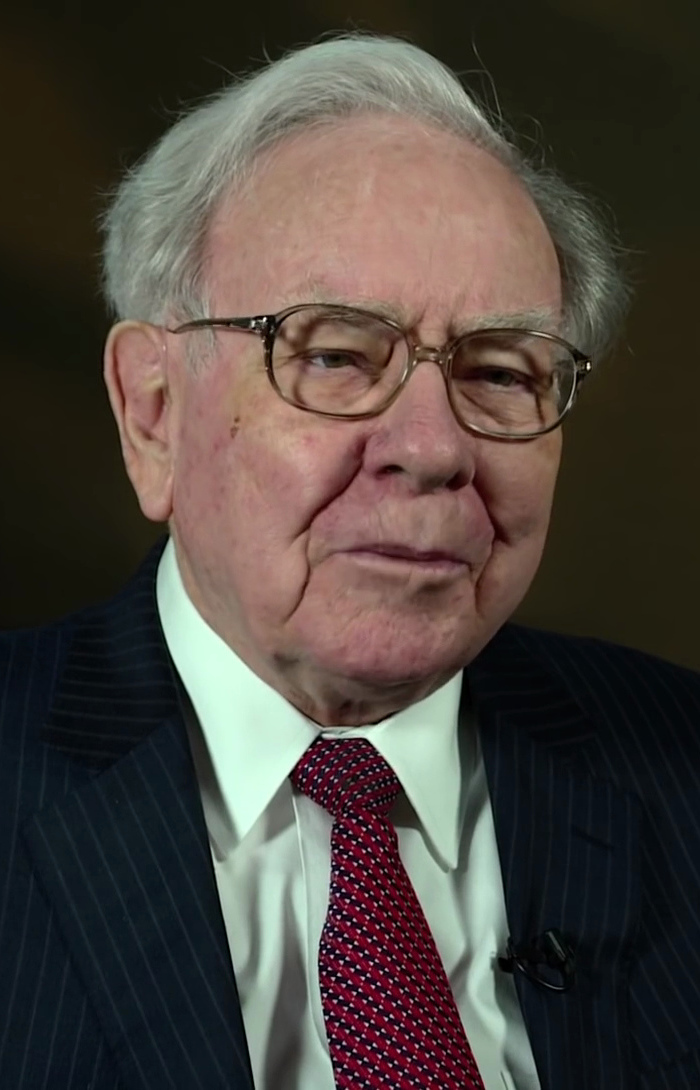
Warren Buffett ran Berkshire Hathaway for about 60 years, from 1965 through 2025.1 His central idea is simple: a stock is part ownership of a business. Buy good companies at sensible prices, then give compounding the years it needs.
The record is the reason people listen. From 1965 through 2025, Berkshire’s market value per share rose about 19.7% a year, against about 10.5% a year for the S&P 500 with dividends included.2
A gap of nine points a year sounds modest. Compounded over six decades, it is enormous: $1 at 10.5% a year grows to about $440, while $1 at 19.7% a year grows to about $58,000.
What $1 at the start of 1965 became by the end of 2025 (log scale)
Berkshire, 19.7% a year S&P 500, 10.5% a year
How he started
Buffett was a businessman as a child. He delivered newspapers, sold chewing gum and Coca-Cola door to door, and bought his first stock at 11. By 14 he had saved enough to buy a 40 acre farm in Nebraska.3
At Columbia Business School he studied under Benjamin Graham, who taught him intrinsic value and the margin of safety. He worked briefly for Graham’s firm, then went home to Omaha and in 1956 founded his first investment partnership, Buffett Associates, Ltd. In 1962 his partnerships were combined into Buffett Partnership Ltd., and over 13 years they beat the Dow Jones Industrial Average by a wide margin.4
In 1965 he took control of Berkshire Hathaway, then a failing textile mill, and moved its cash into insurance and stocks. Permanent capital, insurance float and disciplined capital allocation, refined over decades with his partner Charlie Munger, became the engine of Berkshire’s growth.
Buffett and Berkshire, eight dates
- 1956First partnershipStarts Buffett Associates in Omaha.
- 1965Berkshire HathawayTakes control of a failing textile mill.
- 1972See’s CandiesA $25 million purchase; a turn toward quality.
- 1988Coca-ColaBegins a stake built through 1994.
- 1996GEICOBuys the remaining 49% of the insurer.
- 2009BNSF RailwayA $26 billion deal, completed in 2010.
- 2016AppleBegins what becomes the largest stock holding.
- 2026Greg Abel is CEOAbel became CEO on January 1; Howard Buffett became chairman on September 18, and Warren Buffett became Chairman Emeritus and remained a director.
Three mentors
Benjamin Graham taught Buffett to see stocks as fractional ownership of businesses, to estimate intrinsic value from the fundamentals and to demand a margin of safety. In his preface to the fourth edition, Buffett called Graham’s The Intelligent Investor “by far the best book about investing ever written.”
Philip Fisher pushed him toward business quality: a fair price for an excellent business beats a bargain price for a mediocre one. Fisher pioneered “scuttlebutt” research, learning about a company by talking to its suppliers, customers, employees and competitors.
Charlie Munger, his longtime partner and Berkshire’s vice chairman until his death in 2023, urged Buffett to buy wonderful businesses at fair prices instead of fair businesses at wonderful prices, as Buffett recalled in his 2023 letter.5
A stock is part ownership of a business, and nine extra points a year compounded over six decades is the whole story of Berkshire.
Part 2 of 6 · The company he built
What is Berkshire Hathaway?
Berkshire Hathaway is one of the world’s largest conglomerates. It owns dozens of businesses outright and holds a stock portfolio worth hundreds of billions of dollars.6
Insurance is the engine: GEICO, General Re and Berkshire Hathaway Reinsurance. Insurers collect premiums before they pay claims, and the money they hold in between is called float. Buffett invested that float. In years when the insurers make an underwriting profit, the float costs Berkshire less than nothing, like a loan that pays you interest. Berkshire’s float stood at about $176 billion at the end of 2025.2
Beyond insurance, Berkshire owns BNSF Railway, Berkshire Hathaway Energy, See’s Candies, Dairy Queen, Duracell, Brooks Sports, Fruit of the Loom, Pampered Chef and many others. At the end of 2025 its largest stock holdings included Apple, American Express, Coca-Cola and Moody’s, along with stakes in five Japanese trading companies.2
The subsidiaries run themselves with wide freedom. As CEO, Buffett’s main job was capital allocation: deciding whether each dollar of cash should be reinvested, used to buy a company, used to repay debt or returned to owners through dividends and buybacks. Two companies with similar profits can create very different value depending on those choices. Greg Abel became CEO on January 1, 2026. On September 18, Howard Buffett became chairman; Warren Buffett became Chairman Emeritus and remained a director.7
Insurance float is money Berkshire holds before claims are paid, and when underwriting is profitable it costs less than nothing.
Part 3 of 6 · Four core principles
What principles guide his investing?
Buffett’s approach comes down to two questions: how good is the business, and what price are you paying? Four principles work as filters, and an idea has to pass all four.
- Value. Buy shares trading well below their intrinsic worth, in businesses with strong, predictable economics. The margin of safety, the gap between price and value, protects you when your analysis or the future surprises you.
- Circle of competence. Invest only in industries you genuinely understand, and avoid products you cannot fully explain.
- Economic moats. Look for durable advantages that protect profits: brand power, network effects, scale, switching costs or regulation. A moat lets a great business compound for decades without being competed away.
- Risk control. Risk is not volatility. It is putting money into something you do not understand, or paying too much for something you do. Do your own research, avoid heavy borrowing and refuse opaque or fragile instruments. Survival comes first.
“You only have to be able to evaluate companies within your circle of competence. The size of that circle is not very important; knowing its boundaries, however, is vital.”
Warren Buffett, 1996 letter to Berkshire Hathaway shareholders8
Buffett also says temperament matters more than intelligence. Independent thinking, emotional stability and an understanding of human behavior keep smart people from selling in a panic or buying out of envy.
The words you will meet in his letters
| Term | What it means |
|---|---|
| Intrinsic value | The cash a business will produce over its remaining life, discounted to today. It is an estimate, and it is the yardstick for judging a price. |
| Margin of safety | The discount between intrinsic value and the price you pay. It protects against valuation mistakes and surprises. Graham called it the central concept of investment. |
| Mr. Market | Graham’s picture of the market as a moody partner who offers a new price every day. You can take advantage of him or ignore him. |
| Economic moat | A durable competitive advantage that keeps rivals away for long periods. |
| Insurance float | Premiums an insurer holds before paying claims; free money when underwriting is profitable. |
| Owner earnings | Reported earnings adjusted for non cash items and the capital spending needed to keep the business going. Buffett argues this shows what owners really earn better than net income. |
You can read all of these ideas in his own words in the Berkshire shareholder letters9 and in The Essays of Warren Buffett, edited by Lawrence A. Cunningham.10
The size of your circle of competence matters less than knowing exactly where its edges are.
Part 4 of 6 · Notable investments
What did his best investments have in common?
Each of these positions was held for years or decades, and each rested on a deep understanding of the business underneath.
- American Express, 1964. After the salad oil scandal crushed the share price, Buffett put a large share of his partnership’s capital into Amex, judging that the brand and franchise were undamaged. It became one of his earliest big winners.
- See’s Candies, 1972. A $25 million purchase that had earned $1.9 billion before tax by the time of his 2014 letter.1 See’s taught him the power of a brand, pricing power and a business that needs little capital, and turned Berkshire toward quality over cheapness.
- Coca-Cola, 1988. Berkshire bought a stake in a globally dominant brand for about $1.3 billion. It was worth about $28 billion at the end of 2025.2
- GEICO, 1996. Berkshire bought the 49% of GEICO it did not already own; Buffett had first bought shares in 1951. GEICO’s low cost, direct to consumer model and its float became a core part of Berkshire’s insurance business.11
- BNSF Railway, 2009. A $26 billion deal for the rest of one of North America’s largest rail networks, agreed in 2009 and completed in 2010, a long term bet on American freight.2,12
- Apple, 2016. Buffett has said he judged Apple by how much its customers value its products, more like a consumer business than a technology bet. At the end of 2025 the remaining stake, which cost about $6.3 billion, was worth about $62 billion.2
Value at the end of 2025 as a multiple of what Berkshire paid
None of these is a reason to buy the same stock now. Today’s business, valuation and competition need fresh analysis.
Each famous purchase was a method applied to the facts and prices of its time, not a trade to copy today.
Part 5 of 6 · Quotes and lessons
What did Buffett actually say?
Eight lines from his shareholder letters, each with the year it appeared. The lesson under each one is ours.
Quote
“Long ago, Ben Graham taught me that ‘Price is what you pay; value is what you get.’”
Source: 2008 letter to Berkshire Hathaway shareholders
Means. Price is set by the marginal buyer; value is the cash a business produces over its lifetime.
Quote
“It’s far better to buy a wonderful company at a fair price than a fair company at a wonderful price.”
Source: 1989 letter to Berkshire Hathaway shareholders
Means. A business that keeps earning high returns can be worth paying up for; a cheap but poor business often stays poor.
Quote
“Whether we’re talking about socks or stocks, I like buying quality merchandise when it is marked down.”
Source: 2008 letter to Berkshire Hathaway shareholders
Means. Value investing is quality bought at a discount, not cheap junk.
Quote
“Time is the friend of the wonderful business, the enemy of the mediocre.”
Source: 1989 letter to Berkshire Hathaway shareholders
Means. Great businesses widen their moats over time; weak ones erode.
Quote
“In fact, when we own portions of outstanding businesses with outstanding managements, our favorite holding period is forever.”
Source: 1988 letter to Berkshire Hathaway shareholders
Means. Long holding minimizes taxes and transaction costs and lets compounding work uninterrupted.
Quote
“If you aren’t willing to own a stock for ten years, don’t even think about owning it for ten minutes.”
Source: 1996 letter to Berkshire Hathaway shareholders
Means. Without decade level commitment, you are speculating about price, not investing in a business.
Quote
“Our stay put behavior reflects our view that the stock market serves as a relocation center at which money is moved from the active to the patient.”
Source: 1991 letter to Berkshire Hathaway shareholders
Means. Impatience costs investors in fees, taxes and bad timing; patience collects that value.
Quote
“Our advice: Beware of geeks bearing formulas.”
Source: 2008 letter to Berkshire Hathaway shareholders
Means. Formulas can hide fragile assumptions, so examine what goes into any model before trusting its output.
Ideas he returns to, in our words
- Be fearful when others are greedy and greedy when others are fearful: quality assets get discounted when fear is widespread, so check whether the news changed the business or only the mood.
- Risk comes mainly from not knowing what you are doing. A price drop is not automatically a bargain.
- Avoiding permanent loss comes before chasing gains, because a 50% loss needs a 100% gain to recover.
- Wide diversification suits investors who do not analyze businesses; he has suggested a low cost index fund for them, while those who understand a few businesses well can concentrate.
- Pessimism is the most common cause of low prices, so bargains appear when the news is bad.
- Investing is like baseball with no called strikes: you can wait for a pitch you like, and cash is a position.
- He judged his farm and a New York property by what they would produce, not by daily prices, and says stocks deserve the same view.
- Patience works like a tree planted long ago that gives shade today; most of the gains from compounding arrive in the later years.
- You only find out who has been swimming naked when the tide goes out: easy markets hide weak businesses and heavy debt.
- In a chronically leaking boat, changing vessels does more good than patching leaks.
- A business can afford to lose money but not its reputation.
- Market and economic forecasts tell you little, so build a plan that does not need them.
- Todd Combs recalled Buffett telling students to read about 500 pages a day, because knowledge builds up like compound interest.
- The best investment is in your own skills, which no market cycle or inflation can take away.
- You need only a few good decisions in a lifetime, as long as you avoid big mistakes.
Price is what you pay; value is what you get, and the two have to be judged separately.
Part 6 of 6 · Quality versus price
How can you use his approach yourself?
Buffett’s edge is not secret information. It is a habit of mind that few investors keep up for long: he stays inside his circle of competence, buys businesses rather than tickers, demands a margin of safety, waits for the right pitch and then holds, often for decades.
Protecting what you have comes first, because losses are harder to recover than they look. A 50% fall needs a 100% gain just to get back to even.
The gain you need to recover from a loss
Try the research exercise
- Pick a business you understand. Choose one whose products and customers you know well.
- Write three sentences. One each about its customers, its competitive advantage and how much it must reinvest to grow.
- List the assumptions. Write down what would have to be true about growth and margins to justify today’s price.
- Name what would change your mind. Explain what would weaken your view of the business and what would weaken your valuation, because they can fail separately.
If you do not want to analyze businesses at all, Buffett’s own suggestion is a low cost S&P 500 index fund, bought steadily and held.8 Spreading money across asset types also matters for most savers.13
An excellent business can still be an expensive investment, because quality and price are judged separately.
Quick check
Quick quiz: test what you just read
Pick an answer to see why it is right. 5 questions, no account needed.
1. What two questions sit at the center of Buffett’s approach?
2. From 1965 through 2025, Berkshire’s market value per share grew about 19.7% a year against about 10.5% for the S&P 500. Why does that gap matter so much?
3. What is insurance float, and why did Buffett value it?
4. Which statement matches Buffett’s idea of the circle of competence?
5. What is a limitation of copying a past Buffett investment today?
Questions people ask
Warren Buffett FAQ
What is Warren Buffett’s circle of competence?
It is the set of businesses you understand well enough to judge their future economics. The size of the circle matters less than knowing where its edges are. Inside it you can judge a business with some confidence; outside it you are guessing.
What is an economic moat?
Buffett’s term for a durable competitive advantage that protects a business’s profits, the way a moat protects a castle. Moats come from brand power, network effects, scale, high switching costs or regulation.
What does Warren Buffett recommend for most investors?
For people who do not want to analyze individual businesses, he has repeatedly recommended a low cost index fund that tracks the S&P 500, bought steadily and held for the long term.8 He argues that high fees and frequent trading make that simple approach hard to beat.
How does Warren Buffett define risk?
Not as volatility. Risk comes from putting money into something you do not understand or paying too much for something you do. A temporary price drop in a sound business bought at a sensible price is not, by itself, a loss of value.
What is intrinsic value according to Buffett?
The cash a business will produce over its remaining life, discounted back to today. It is an estimate, because it depends on forecasts and on the interest rate used. Comparing it with the price tells you whether you have a margin of safety.
You finished this lesson.
You now have the main ideas from this lesson. Next, practice where mistakes cost nothing: a free account saves your progress and unlocks the practice simulator with virtual money.
Free, no card. Lessons stay free to read without an account.
Your notes on one card, and what comes next
- Step 1 · DoneWarren Buffett
See your notes on one card
- Buffett treats a stock as part ownership of a business and judges its quality and its price separately.
- From 1965 through 2025, Berkshire’s market value per share rose about 19.7% a year, against about 10.5% for the S&P 500 with dividends.
- He invests only inside his circle of competence and looks for durable moats bought with a margin of safety.
- Risk, to Buffett, is not knowing what you are doing or overpaying, not volatility.
- For people who do not analyze businesses, he recommends a low cost S&P 500 index fund held for the long term.
- 2Step 2 · NowSave your progress with a free account
Keep your course progress and practice on real U.S. stocks with virtual cash.
Create your free account No card needed. Lessons stay free to read. - 3Step 3Follow the learning pathThe learning pathFree
Learn the rest in the right order
Ten modules of lessons, videos, tools and quizzes, ordered so each step builds on the last, from market basics to company analysis and risk.
Start the learning path
Want the full sequence? See the course outline →
Sources and assumptions
- Warren Buffett, 2014 Letter to Berkshire Hathaway Shareholders
- Berkshire Hathaway 2025 Annual Letter to Shareholders (February 28, 2026)
- The Snowball by Alice Schroeder
- Warren Buffett: The Superinvestors of Graham and Doddsville
- Warren Buffett, 2023 letter to Berkshire Hathaway shareholders
- Berkshire Hathaway annual reports
- Berkshire Hathaway 2026 Proxy Statement
- Warren Buffett, 1996 letter to Berkshire Hathaway shareholders
- Berkshire Hathaway shareholder letters
- The Essays of Warren Buffett, edited by Lawrence A. Cunningham
- Warren Buffett, 1995 Letter to Berkshire Hathaway Shareholders
- Berkshire Hathaway press release, November 3, 2009
- Investor.gov: Asset allocation
This lesson is for general financial education only. It does not provide personal financial advice, stock recommendations, or a guarantee of investment results.
StockEducation provides general education, not personal financial, tax or legal advice. Companies and funds named here are teaching examples only. Nothing here recommends buying or selling any security. Investing involves risk, including the loss of money you invest.


