
Investment library · Videos
Investment videos
A free watch list that runs from ten minute explainers on how the market works to full annual meetings and university lectures, grouped by topic so you can pick the one video that answers this week’s question.
Written by the StockEducation Editorial Team · Reviewed by Associate Professor Charles Lo, CPA, PhD · Updated · How we check lessons

Which investing videos are worth a beginner’s time?
Start with short explainers on how exchanges, stocks and the economy fit together, then move to evidence based channels such as Ben Felix and to the investors themselves, such as the Berkshire Hathaway annual meetings. Videos that narrate a billionaire’s portfolio or promise a secret are entertainment, so treat them as background rather than instruction. Each card below states what the video is, who made it, when it was published and the one limitation to keep in mind.
- Choose a video by the job it does for you, not by the fame of the speaker
- Tell a primary source, the investor speaking, from a narrator summarizing public filings
- Turn a lecture into a skill by checking one claim against a real company filing or dataset
Start the lessonBrowse the libraryWhich one for which jobRead the FAQ
New here? Start with these three
Part 1 of 12 · Using the library
How do you get the most from this library?
Video is the fastest way to hear an idea explained and the easiest way to feel you have learned something you have not. The difference is what you do after you press stop. Each card tells you what the video covers, who made it, the year it was published and the limitation to keep in mind, so you can decide in a minute whether it is for you today.
Four steps for any item in this library
- 1Pick one group
Choose the topic you need this week instead of scrolling the whole page.
- 2Watch with a notebook
Write down three claims the speaker makes and one word you did not understand.
- 3Check one claim
Open a company’s 10-K on SEC EDGAR or a free data site and see whether the claim holds for a real business.
- 4Record the source
Note whether you heard the investor directly or a narrator describing public filings, and the year it was recorded.
Find what you need
Nothing matches that search. Try a shorter word or clear the filter.
A talk given by the investor is a primary source. A video about the investor is someone else’s summary.
Part 2 of 12 · Market basics
How does the stock market actually work?
Short explainers on exchanges, prices, companies and the first accounting you need. Read this group first if words like index, broker or balance sheet are still fuzzy.
 How the stock exchange works (for dummies)Kurzgesagt In a Nutshell · 2013Best for: Your first look at the marketFreeBeginnerMarket basicsAnimationExplainer
An animated explainer that follows a fictional company to show why a business sells shares, how a price forms when buyers and sellers meet and why that price moves. It covers the idea of an exchange in a few minutes with no jargon.
Use it to
- Understand why a company issues shares in the first place
- See how supply and demand sets a share price
- Explain the stock market to a friend in under five minutes
Watch out
It is a cartoon simplification that says nothing about brokers, indexes, dividends or fees, and the examples are invented.
 How the stock market works in under 8 minutesBuzzFeedVideoBest for: A quick vocabulary pass before Lesson 2FreeBeginnerMarket basicsExplainer
A fast pass through the vocabulary of the market: what a share is, what an exchange does, what an index measures and why prices rise and fall. It is built for someone who has never opened a brokerage account.
Use it to
- Learn the meaning of stock, exchange, index and broker in one sitting
- Pair with the Kurzgesagt video for a complete first picture
Watch out
It comes from a general entertainment channel rather than a finance educator, so it skims and does not cite sources.
 Explained: The stock market (Netflix full episode)Netflix (Explained series) · 2020Best for: A documentary style overview with historyFreeBeginnerMarket basicsDocumentaryMarket history
A full episode of the Netflix series Explained, posted free on the Netflix channel. It covers what the stock market is for, who owns stocks, how the market relates to the real economy and why it swings, using interviews and archive footage.
Use it to
- Get the big picture of what the market is and who it serves
- Hear why the market and the economy can move in different directions
- Start a conversation about why so few households own most of the stock
Watch out
It is a journalistic piece with a point of view about inequality and market structure, and it teaches no practical steps.
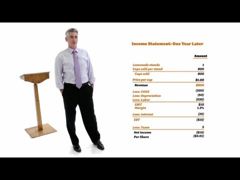 Everything you need to know about finance and investing in under an hourWilliam Ackman for Big Think · 2012 · under an hourBest for: Learning the accounting behind a stockFreeBeginnerFinance basicsLectureBusiness
Hedge fund manager Bill Ackman walks through how a business works, from a lemonade stand to an income statement and balance sheet, then explains what makes a good investment. It is one continuous lecture with slides.
Use it to
- Follow how revenue, profit, debt and equity connect in a simple business
- Learn what a balance sheet and income statement show before reading a real one
- Hear a professional investor’s checklist for a quality company
Watch out
Ackman runs an activist hedge fund, and the second half reflects his concentrated, high conviction style rather than a beginner’s diversified approach.
 Khan Academy: stocks and bondsKhan AcademyBest for: Structured, ad free fundamentalsFreeBeginnerFinance basicsCourseNonprofitNew in the library
A free unit of short whiteboard videos from the nonprofit Khan Academy covering what a stock is, what a bond is, how shares are issued, what dilution means and how to read basic company numbers. Each video runs a few minutes and builds on the last.
Use it to
- Work through the unit in order as a mini course
- Look up a single concept such as dilution or a bond’s yield when it comes up
- Continue into the wider core finance section for interest and inflation
Watch out
The videos are older hand drawn lessons with simple invented numbers, so you still need a real filing to see the concepts in practice.
A stock exchange is a marketplace where existing shares change hands; the company usually gets no money from those trades.
Part 3 of 12 · Index investing and evidence
Why do most people end up in index funds?
The evidence on costs, diversification and beating the market, mostly from channels that cite the research. Read this group before you try anything more active.
 Investing 101Ben Felix · 2025Best for: The one video to watch before you open an accountFreeBeginnerIndex investingExplainerEvidenceNew in the library
A single video that lays out what investing is, why stocks and bonds pay a return, what diversification does and why a low cost index fund is the default for most people. It is the channel’s own entry point for new viewers.
Use it to
- Learn why expected returns come from bearing risk, not from being clever
- Understand what a total market index fund actually holds
- Build the vocabulary for the rest of this group
Watch out
It is scripted and dense, so pause and replay rather than letting it run.
 The case for index fundsBen Felix · 2025Best for: The evidence behind the index fund adviceFreeBeginnerIndex investingActive versus passiveEvidenceNew in the library
A walk through the research on how actively managed funds perform against index funds after costs, why that result persists and what it means for an ordinary saver. It covers fees, skill, luck and survivorship.
Use it to
- See the data behind the claim that most active funds trail their index
- Learn why past outperformance rarely predicts future results
- Check the papers cited in the description
Watch out
It argues one side of the debate, so pair it with the Bogle interview and your own reading of the SPIVA scorecards.
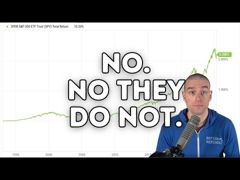 Do stocks return 10% on average?Ben Felix · 2024Best for: Setting realistic expectationsFreeBeginnerExpected returnsMarket historyEvidenceNew in the library
An examination of the common claim that stocks return about ten percent a year: where the number comes from, how much it varies by period and country, and why the historical U.S. average is a poor guide to what you should expect next.
Use it to
- Learn the difference between an average return and the return you will get
- Understand why U.S. market history may flatter the future
- Use a lower assumption in your own retirement math
Watch out
It is a statistics heavy video and offers no simple number to replace the one it questions.
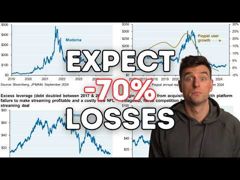 The risk of (individual) stocksBen Felix · 2025Best for: Why diversification is not optionalFreeBeginnerDiversificationStock pickingEvidenceNew in the library
An explanation of why owning a few individual stocks is riskier than it feels: most stocks underperform cash over their lifetimes, a handful of winners drive the market’s return and the odds of holding those winners are low.
Use it to
- Learn what skewness means for a stock picker
- See why a concentrated portfolio can trail the market even in a strong year
- Decide how much, if any, of your money belongs in single stocks
Watch out
It does not address the case for owning employer stock or a company you know well, which some viewers will want.
 In pursuit of the perfect portfolio: John C. BogleMIT Laboratory for Financial EngineeringBest for: Hearing the index fund case from its inventorFreeBeginnerIndex investingInterviewVanguard
A long interview with Vanguard founder John Bogle recorded for an MIT project on the history of portfolio theory. Bogle explains why he created the first index mutual fund, how costs compound against investors and what a sensible portfolio looks like.
Use it to
- Understand why expense ratios matter over decades
- Hear Bogle’s view on stock and bond allocation by age
- Learn the history behind the fund type most retirement plans use
Watch out
It is an academic interview with no production polish, and Bogle is an advocate for the company and product he built.
Ben Felix (Common Sense Investing)Ben Felix, PWL CapitalBest for: Research backed answers to common investing mythsFreeIntermediateEvidence based investingIndex fundsAcademic researchNew in the library
A channel from portfolio manager Ben Felix that turns academic research on investing into scripted videos of ten to twenty minutes. Topics include why stock picking rarely works, dividends, asset allocation, market crashes and how to think about risk. Individual videos from the channel appear across this library.
Use it to
- Check what the evidence says before adopting a strategy you saw online
- Learn why dividends are not free money
- Read the papers linked in each description
Watch out
Felix works for a Canadian wealth management firm, the videos are dense, and some examples use Canadian accounts and products rather than U.S. ones.
 The Plain BagelRichard Coffin, The Plain BagelBest for: Calm explanations of trending topicsFreeBeginnerInvesting basicsPersonal financeExplainerNew in the library
A channel run by CFA charterholder Richard Coffin that explains investing and personal finance topics in roughly ten minute videos, from how ETFs work to why hype stocks fail. It is known for calm, balanced breakdowns of whatever is trending.
Use it to
- Get a sober take on a stock or product everyone is suddenly talking about
- Learn how ETFs, bonds and options actually work
- Spot the marketing tricks used by finance influencers
Watch out
The host is based in Canada, so tax and account examples sometimes need translating to U.S. equivalents.
Over long periods most actively managed funds have trailed a comparable low cost index fund after fees.
Part 4 of 12 · Building a portfolio
How do you build and keep a portfolio?
Videos on the choices that follow the index fund decision: how much in stocks versus bonds, whether to invest a lump sum at once and why cash is not a long term plan. Read after the index investing group.
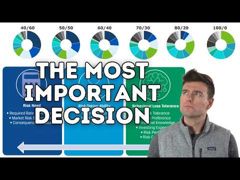 Choosing an asset allocation (how much in stocks vs. bonds?)Ben Felix · 2025Best for: Deciding your stock and bond mixFreeBeginnerAsset allocationBondsRisk toleranceNew in the library
A framework for deciding the split between stocks and bonds based on your ability, willingness and need to take risk, with the evidence on how different mixes have behaved through crashes and recoveries.
Use it to
- Write down your own ability, willingness and need to take risk
- See how a sixty forty portfolio behaved in past crashes
- Pick a mix you could hold through a bad year
Watch out
It does not give a single recommended allocation, which is deliberate but can frustrate someone wanting a rule.
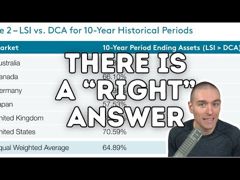 Dollar cost averaging vs. lump sum investingBen Felix · 2023Best for: What to do with a lump sumFreeBeginnerLump sumDollar cost averagingEvidenceNew in the library
A comparison of investing a windfall all at once against spreading it over months, using historical data from several markets. It separates the math, which favors investing immediately, from the psychology, which often does not.
Use it to
- Learn why waiting usually costs more than it saves
- Understand why regular paycheck investing is not the same thing
- Choose a rule you can follow without second guessing
Watch out
It assumes the money is already earmarked for long term investing and does not cover emergency funds or debt.
 Cash is a terrible long term investment, even at 5% interestBen Felix · 2023Best for: Deciding how much to keep in cashFreeBeginnerCashInflationExpected returnsNew in the library
A response to the moment when savings accounts paid five percent: why cash still loses to stocks and bonds over long periods after inflation and taxes, and what cash is actually for in a plan.
Use it to
- Learn the difference between a nominal and a real return
- Set a purpose for every dollar you hold in cash
- Avoid parking long term money in savings because rates look high
Watch out
It was made when short rates were unusually high, so the specific rates quoted are dated.
 Why you will (probably) lose money trading optionsBen Felix · 2024Best for: Understanding options before an app offers them to youFreeIntermediateOptionsTradingEvidenceNew in the library
A review of the academic evidence on retail options trading: the average outcomes, the role of costs and the behavioral reasons people keep trading despite them. It explains what an option is before it gets to the data.
Use it to
- Learn what a call and a put are without a sales pitch
- See the measured results of retail options traders
- Recognize why brokers promote options trading
Watch out
It is firmly against retail options trading and does not cover legitimate uses such as hedging a concentrated position.
Investing a lump sum immediately has beaten spreading it out over time in most historical periods, because markets rise more often than they fall.
Part 5 of 12 · Retirement accounts and taxes
Which retirement account should you use?
U.S. account types, the tax rules around them and the public services that protect savers. Read this group when you are ready to open an account and want to put it in the right wrapper.
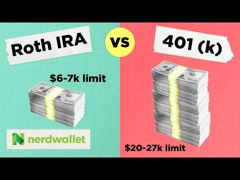 Roth IRA vs 401(k): the best investment for youNerdWalletBest for: Choosing between a Roth IRA and a 401(k)FreeBeginnerRoth IRA401(k)TaxesNew in the library
A short explainer from the personal finance publisher NerdWallet on the differences between a Roth IRA and a workplace 401(k): who can contribute, how each is taxed, employer matching and how to prioritize between them.
Use it to
- Learn why a 401(k) match comes first
- Understand the tax now versus tax later choice
- Check the current contribution limits on the IRS site after watching
Watch out
Contribution limits and income thresholds change every year, so verify the numbers on irs.gov, and NerdWallet earns referral fees from the brokers it recommends.
 Two Cents (PBS)PBS Digital StudiosBest for: Personal finance context around investingFreeBeginnerPersonal financeExplainerPublic mediaNew in the library
A PBS personal finance show hosted by two certified financial planners. Episodes run about ten minutes and cover budgeting, index funds, retirement accounts, credit, scams and the psychology of money, with sources listed in the descriptions.
Use it to
- Understand 401(k) and IRA accounts before choosing one
- Learn why fees and time matter more than picking winners
- Build the saving habit that funds your first investment
Watch out
It is personal finance first, so it does not teach company analysis, and some episodes are several years old.
 U.S. Securities and Exchange Commission channelU.S. Securities and Exchange CommissionBest for: Knowing what protects you and what to avoidFreeBeginnerInvestor protectionRegulatorFraudNew in the library
The official SEC channel, with short Investor.gov public service videos on fraud warning signs, checking a broker’s record, understanding fees and the basics of saving and investing, alongside recordings of SEC events.
Use it to
- Learn the warning signs of an investment scam
- See how to check an adviser or broker before sending money
- Understand what the SEC does and does not do for you
Watch out
The channel mixes short investor education clips with long policy meetings, so use the search box rather than scrolling.
A Roth account is funded with money that has already been taxed and grows tax free; a traditional 401(k) or IRA defers the tax until you withdraw.
Part 6 of 12 · Buffett, Munger and the annual meetings
What do Warren Buffett and Charlie Munger actually say?
Full annual meetings, final interviews and talks from the two Berkshire Hathaway partners, plus a research based look at whether Buffett’s record can be copied. The full meetings and interviews are the originals; several other cards are fan edits of the same material.
 Warren Buffett presides over the 2025 Berkshire Hathaway annual shareholder meetingWarren Buffett, Greg Abel and Ajit Jain (CNBC Television) · 2025 · about 6 hoursBest for: The last full meeting Buffett ran as chief executiveFreeIntermediateBerkshire meetingsQ&APrimary sourceNew in the library
The complete 2025 Berkshire Hathaway shareholder meeting as streamed by CNBC. Buffett takes questions for hours on tariffs, cash, Japan, insurance and succession, and at the end announces that he will step down as chief executive at the close of the year with Greg Abel taking over.
Use it to
- Watch the first hour to hear how he frames a year’s events
- Jump to the closing minutes for the succession announcement
- Compare his answers with the 2024 meeting on the same topics
Watch out
It is a six hour recording with no chapter markers in the video itself, so use the CNBC archive transcript to find topics.
 Watch Warren Buffett preside over the full 2024 Berkshire Hathaway annual shareholders meetingWarren Buffett, Greg Abel and Ajit Jain (CNBC Television) · 2024 · about 6 hoursBest for: Hearing a full year of questions answered in real timeFreeIntermediateBerkshire meetingsQ&APrimary sourceNew in the library
The complete 2024 shareholder meeting, the first after Charlie Munger’s death, as streamed by CNBC. Buffett, Greg Abel and Ajit Jain answer questions on Apple, cash holdings, artificial intelligence, insurance and how Berkshire will run after Buffett.
Use it to
- Note how often the answer is that they do not know
- Pick two questions and read the related section of Berkshire’s annual report
- Listen for the tribute to Munger at the start
Watch out
The company specific comments date quickly and the recording is long, so watch it in sessions rather than at once.
 Charlie Munger’s final interview with CNBCCharlie Munger with Becky Quick (CNBC) · 2023Best for: Munger in his own words rather than a narrator’sFreeBeginnerMungerInterviewPrimary sourceNew in the library
Charlie Munger’s last television interview, recorded with CNBC’s Becky Quick shortly before his death in November 2023 and released as part of a CNBC special. He talks about his partnership with Buffett, the investments he got wrong and right, and the habits of thinking he credits.
Use it to
- Hear his view of what made the Berkshire partnership work
- Note the mistakes he admits and how he describes learning from them
- Compare with the narrated Munger summary further down
Watch out
It is a conversational interview about a life rather than a lesson in method, so it inspires more than it instructs.
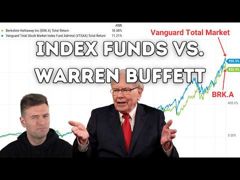 What about Warren Buffett?Ben Felix · 2024Best for: Understanding Buffett’s record without trying to copy itFreeIntermediateBuffettEvidenceFactor investingNew in the library
A research based answer to the question every index investor hears: if the market cannot be beaten, how did Buffett do it? It covers the academic work explaining his returns through cheap leverage and a tilt to quality stocks, and why that is hard to copy.
Use it to
- Learn what the research says explains Berkshire’s returns
- See why his edge depended on structure as much as stock picking
- Decide what, if anything, from his approach fits a small investor
Watch out
It is an outside analysis rather than Buffett speaking, and it assumes you know what a factor is.
 Warren Buffett speaks with Florida UniversityWarren Buffett, University of Florida (posted by Leyland Private Asset Management) · 1998Best for: The one Buffett talk to watch firstFreeBeginnerValue investingLectureTemperament
A recording of Buffett’s 1998 talk and question session with business students at the University of Florida. He covers how he judges a business, why temperament beats intelligence, the danger of leverage and what he would do starting with a small sum.
Use it to
- Hear how Buffett thinks about a company’s moat and management
- Learn why he says borrowing to invest is the one way to lose everything
- Write down his questions about a business and ask them of a company you know
Watch out
The talk is from 1998, so the specific companies and market comments are dated even though the principles are not.
 Warren Buffett reveals his investment strategy for mastering the marketYahoo Finance (interview by Andy Serwer)Best for: Buffett on index funds and patienceFreeBeginnerInterviewValue investing
A sit down interview with Yahoo Finance editor in chief Andy Serwer in which Buffett talks about buying businesses rather than tickers, ignoring forecasts, holding for the long run and why most people should own an index fund.
Use it to
- Hear Buffett’s advice for ordinary savers rather than professionals
- Compare his views here with the Florida talk twenty years earlier
Watch out
It is a news interview, so topics jump around and some questions are about that year’s headlines.
Warren Buffett Archive (CNBC)CNBCBest for: Finding what Buffett said on any topicFreeIntermediateBerkshire meetingsArchiveTranscriptsNew in the library
CNBC’s searchable archive of Berkshire Hathaway annual meeting videos going back to 1994, with transcripts, short clips by topic and Buffett’s CNBC interviews. You can search a phrase and jump to the moment it was said.
Use it to
- Search a term such as inflation or buybacks and watch every answer
- Watch a full annual meeting Q&A instead of a fan edit
- Read a transcript alongside the video
Watch out
It is run by a media company and sits beside CNBC’s market coverage, which is far more short term than Buffett’s own message.
 Full Q&A: Warren Buffett and Charlie Munger, 2018 Berkshire Hathaway annual meetingWarren Buffett and Charlie Munger (edit posted by IDP) · 2018Best for: Several hours of unscripted answersFreeIntermediateBerkshire meetingsQ&AValue investing
A trimmed edit of the shareholder question session from the 2018 Berkshire Hathaway annual meeting, with the breaks removed. Buffett and Munger answer questions on individual holdings, interest rates, mistakes and how to think about a business.
Use it to
- Hear how the pair reason through a question in real time
- Note how often they say they do not know
- Pick two questions and look up the companies discussed
Watch out
It is a third party edit of a 2018 event, so the company comments are dated; the official full recordings of 2024 and 2025 are on this page.
 Buffett and Gates on successWarren Buffett and Bill Gates (posted by Remotely Controlled)Best for: Life lessons rather than stock lessonsFreeBeginnerCareerQ&AMindset
A recording of a joint question session Buffett and Gates held with business students, covering how they define success, the habits they credit, what they would tell a young person and how they think about risk and luck.
Use it to
- Hear two long careers described in their own words
- Pick up habits around reading, focus and saying no
Watch out
It is about careers and character more than investing, and it is a fan upload with no production notes.
 Warren Buffett: how anyone can invest and become richWarren Buffett (clips compiled by Primed)Best for: A short tour of Buffett’s rulesFreeBeginnerCompilationValue investing
A compilation of Buffett interview and meeting clips arranged around a few themes: buy what you understand, think in decades, let compounding work and avoid debt. It is a quick way to hear the main ideas without a two hour lecture.
Use it to
- Get the gist of Buffett’s approach in one sitting
- Decide which full talk to watch next
Watch out
Clips are cut from different years without dates or sources, and the title promises wealth that no video can deliver.
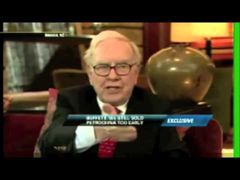 Stock market for beginners: advice by Warren BuffettWarren Buffett (clip posted by George Kairu)Best for: A five minute dose of BuffettFreeBeginnerCompilationMarket basics
A short clip of Buffett explaining what a beginner should and should not do in the stock market: ignore daily prices, treat shares as part ownership of a business and stay within your circle of competence.
Use it to
- Hear the idea of a stock as a piece of a business
- Share with a friend who wants to start trading
Watch out
It is a reposted clip without the original date or event, so you lose the context of the question he was answering.
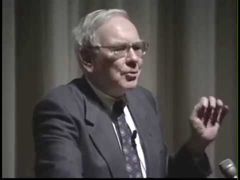 Best Warren Buffett speechWarren Buffett (posted by BATTLE BEARS)Best for: Buffett on habits and emotionFreeBeginnerLectureTemperamentHabits
A fan upload of a long Buffett talk and student Q&A in which he discusses his daily habits, how he avoids acting on emotion, why he reads so much and how he evaluates businesses and people.
Use it to
- Hear how he keeps calm when prices fall
- Note the reading and thinking routine he describes
Watch out
The title is the uploader’s opinion, the event and year are not stated, and much of the content overlaps with the Florida talk.
 How billionaire Charlie Munger invests his moneyJack ChappleBest for: An introduction to Munger’s thinkingFreeBeginnerMungerNarrated summaryMental models
A narrated summary of Charlie Munger’s approach: concentrate in a few businesses you understand, wait for the obvious bet, invert problems and avoid the common psychological traps. It stitches together Munger quotes with the narrator’s commentary.
Use it to
- Learn what Munger means by inverting a problem
- Pick up a few of his mental models before reading Poor Charlie’s Almanack
Watch out
It is a creator’s summary rather than Munger speaking at length, and the channel makes similar videos about many wealthy people for views.
Berkshire Hathaway’s annual meeting question session runs for about five hours, and CNBC streams and archives the whole thing free.
Part 7 of 12 · Valuation and reading filings
How do professionals judge and value a company?
Lectures and interviews on picking and valuing businesses, including a full university course. Read this group after you understand index funds and want to see how active investors actually work.
 The little book that beats the market (Talks at Google)Joel Greenblatt, Talks at GoogleBest for: A simple, testable value strategy explained by its authorFreeIntermediateValue investingLectureMagic formula
Investor and Columbia professor Joel Greenblatt explains the two factor method from his book, which ranks stocks on earnings yield and return on capital, and why he believes it works over long periods despite stretches of poor results.
Use it to
- Understand earnings yield and return on capital
- Hear why a strategy that works can still underperform for years
- Compare his approach with a plain index fund
Watch out
Greenblatt is promoting his book and his own funds use the method, and the backtests he cites are his own.
 Joel Greenblatt’s market secrets (Intelligent Investing with Steve Forbes)Joel Greenblatt, ForbesBest for: The Google talk in interview formFreeIntermediateValue investingInterview
A studio interview in which Greenblatt talks with Steve Forbes about why cheap, good companies tend to win, why investors abandon sound strategies at the worst time and how he teaches valuation to his students.
Use it to
- Hear the same ideas with a sharper focus on investor behavior
- Note why he says patience is the real edge
Watch out
Forbes is a media business with an advertising model, and the interview is a promotional stop for the book.
 Philip Fisher’s 15 points for growth stocksDavid DolynnyBest for: A checklist for judging a growing businessFreeIntermediateGrowth investingChecklistNarrated summary
A narrated walk through the fifteen questions Philip Fisher set out in Common Stocks and Uncommon Profits for judging a growth company, from the strength of its sales organization to the honesty of its management.
Use it to
- Turn the fifteen points into a checklist for a company you follow
- See which questions can be answered from a 10-K and which need other sources
Watch out
It is one person’s summary of a 1958 book, so it is best used as a pointer to the original rather than a substitute.
 Aswath Damodaran on valuationAswath Damodaran, NYU SternBest for: A full university valuation course for freeFreeAdvancedValuationUniversity courseCorporate financeNew in the library
NYU Stern professor Aswath Damodaran posts his complete valuation and corporate finance courses each semester, plus short sessions valuing real companies in the news. The lectures explain discounted cash flow, multiples and the stories behind the numbers.
Use it to
- Follow the valuation playlist in order over a semester
- Watch a single company valuation to see the method applied
- Download the spreadsheets he links from his NYU site
Watch out
This is graduate level material that assumes comfort with spreadsheets and accounting, so it rewards patience rather than a single viewing.
Session 1 (Val MBAs): valuation, broad themes and logistical detailsAswath Damodaran, NYU Stern · 2024Best for: Starting a full valuation course from lecture oneFreeAdvancedValuationUniversity courseLectureNew in the library
The opening lecture of Damodaran’s spring 2024 MBA valuation course at NYU Stern, recorded in the classroom and posted free. He sets out why valuation is a craft, the main approaches, the biases every valuer brings and how the semester will run.
Use it to
- Follow the full 2024 playlist in order on his channel
- Download the slides and spreadsheets from his NYU site
- Use the first session to decide whether the course is for you yet
Watch out
It is the first of about two dozen ninety minute sessions, so it is a commitment rather than a quick explainer.
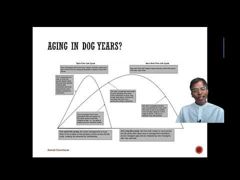 The corporate life cycle: the key ideasAswath Damodaran, NYU Stern · 2024Best for: A model for where a company sits before you value itFreeIntermediateCorporate life cycleValuationBusiness strategyNew in the library
Damodaran summarizes his 2024 book on the corporate life cycle: how young, growth, mature and declining companies differ in what drives their value, how they should be managed and why investors misjudge companies by applying the wrong stage’s rules.
Use it to
- Place three companies you know on the life cycle
- See why a mature company’s buybacks and a young company’s losses can both be sensible
- Use it as a bridge from the explainers to the full course
Watch out
It promotes a book, and the year of upload could not be confirmed on this page although the book was published in 2024.
 The best investing advice I ever gotPhil Town, Rule #1 InvestingBest for: A motivational nudge toward Buffett style thinkingFreeBeginnerValue investingMindset
Author Phil Town retells the advice that shaped his approach: buy wonderful businesses you understand at a discount and treat a share as owning the whole company. It is a short, personal piece of storytelling.
Use it to
- Hear the ownership mindset in simple terms
- Decide whether his books are for you
Watch out
The channel sells paid courses and coaching, so the video doubles as a funnel into those products.
 Anton Tagliaferro on the four rules of investingAnton Tagliaferro, Investors MutualBest for: Four questions to ask of any stockFreeBeginnerQuality investingFund managerChecklist
Fund manager Anton Tagliaferro sets out the four tests he applies to any company: a competitive advantage, recurring earnings, capable management and a sensible price. It is a short presentation aimed at retail investors.
Use it to
- Write the four rules down and test them on one company
- Compare them with Fisher’s fifteen points
Watch out
He manages funds for clients, the examples are companies outside the U.S., and the video is a form of marketing for his firm.
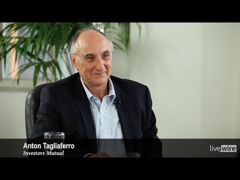 The timeless tools of investingAnton Tagliaferro, Livewire MarketsBest for: The four rules with more storiesFreeBeginnerQuality investingInterview
An interview with Tagliaferro on the lessons that have held up across his career: patience, avoiding fads, focusing on cash flow and keeping a margin of safety. It expands on the four rules video.
Use it to
- Hear how a professional avoids hype cycles
- Note which lessons repeat across the three Tagliaferro videos
Watch out
Livewire is an investment media site that hosts fund managers, so the conversation is partly a showcase for his funds and uses companies outside the U.S.
How companies grow over timeAnton Tagliaferro, Investors MutualBest for: Understanding where earnings growth comes fromFreeBeginnerBusiness basicsEarnings growth
A short explanation of the ways a company can grow its earnings, such as raising prices, selling more, expanding into new markets or buying other businesses, and why durable growth is worth more than a one off jump.
Use it to
- List the growth levers and find them in a company’s annual report
- Separate recurring growth from one time gains
Watch out
It is brief and framed around the firm’s own investing style, and the companies named are outside the U.S.
 David Paradice: you need to think differentlyDavid Paradice, Livewire MarketsBest for: A window into how a small cap manager thinksFreeIntermediateSmall capsFund managerInterview
Small and mid cap fund manager David Paradice talks about looking where others are not, meeting management in person, the value of a contrarian view and the mistakes he has made along the way.
Use it to
- Hear why smaller companies can be less researched and more volatile
- Note how much he relies on meeting management, which you cannot do
Watch out
His edge comes from access and resources a beginner does not have, and the interview showcases a fund management business.
A company’s audited numbers are in its annual 10-K filing on SEC EDGAR, which is free to read.
Part 8 of 12 · Behavior, bubbles and cycles
Why do bubbles, crashes and cycles keep happening?
Talks on why markets swing between optimism and fear, what the data says about crashes and whether the current enthusiasm for artificial intelligence is a bubble. Best after you have felt a down month in your own account.
 Market crashes (2025 edition)Ben Felix · 2025Best for: What to do when the market is fallingFreeBeginnerMarket crashesBehaviorEvidenceNew in the library
Made during the sharp fall of April 2025, this video reviews how often markets crash, how long recoveries have taken and what the evidence says about selling or waiting for calm. It is a refresh of an earlier video with updated data.
Use it to
- Learn the historical frequency and depth of drawdowns
- See why missing the best days after a crash is so costly
- Write down your own rule for a crash before the next one
Watch out
It is aimed at long term index investors and offers no comfort to anyone holding concentrated positions on margin.
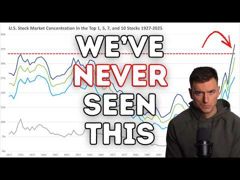 The “AI bubble”Ben Felix · 2025Best for: Thinking about a bubble without trying to time itFreeIntermediateBubblesArtificial intelligenceValuationNew in the library
An evidence based look at whether the surge in artificial intelligence stocks is a bubble: what past bubbles had in common, how concentrated the U.S. market has become and what a diversified investor should do about a theme they cannot predict.
Use it to
- Learn the features researchers use to identify a bubble
- See how much of a total market fund now sits in a few technology companies
- Decide whether your allocation already handles the risk
Watch out
It was made at a specific point in late 2025, so the prices and concentration figures it cites will have moved.
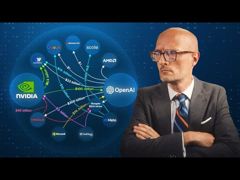 Is AI’s circular financing inflating a bubble?Patrick Boyle · 2025Best for: A historical lens on the artificial intelligence boomFreeIntermediateBubblesArtificial intelligenceMarket historyNew in the library
Former hedge fund manager and finance lecturer Patrick Boyle explains the web of deals in which chip makers, cloud providers and model builders invest in and buy from one another, and compares it with the vendor financing that preceded the telecom bust of 2000.
Use it to
- Learn what circular financing means and why it flatters revenue
- Compare the 2000 telecom example with today’s deals
- Practice separating a real business from a financing loop
Watch out
Boyle’s style is dry and skeptical and the video is commentary on a live situation, so treat it as one informed view rather than a verdict.
 Howard Marks on mastering the market cycleHoward Marks, UCLA Anderson · 2018Best for: Learning to read the mood of the marketFreeIntermediateMarket cyclesLectureRisk
Oaktree co founder Howard Marks speaks to UCLA Anderson students and alumni about the ideas in his book Mastering the Market Cycle: why cycles happen, how investor psychology drives them and how to tilt a portfolio toward caution or aggression depending on where you are in one.
Use it to
- Understand what Marks means by taking the market’s temperature
- Learn why he does not try to forecast, only to position
- Pair with his book or memos on the Oaktree site
Watch out
Marks is promoting a book, and the idea of adjusting exposure through the cycle is harder to do in practice than it sounds in a lecture.
 The Most Important Thing: origins and inspirations (Talks at Google)Howard Marks, Talks at GoogleBest for: The ideas behind a classic investing bookFreeIntermediateRiskLectureSecond level thinking
Marks explains the thinking behind his book The Most Important Thing: second level thinking, the relationship between price and value, why risk means more things can happen than will happen, and the writers who shaped him.
Use it to
- Learn what second level thinking is and try it on a headline
- Understand why risk is not the same as volatility
Watch out
It is a book talk that assumes you know a little about markets, and it overlaps with the UCLA lecture.
 Navigating market cycles with Howard Marks (Real Vision Classics)Howard Marks, Real VisionBest for: Marks in conversation rather than lectureFreeIntermediateMarket cyclesInterviewRisk
A long interview from the Real Vision archive in which Marks discusses risk control, the difference between being early and being wrong, how Oaktree behaved in 2008 and why defensive investing wins over full cycles.
Use it to
- Hear how a distressed debt investor behaved during the 2008 crisis
- Note his distinction between risk and the perception of risk
Watch out
Real Vision is a subscription media business and much of its other content is trading and macro focused.
 Howard Marks: Delivering Alpha 2018Howard Marks, Oaktree Capital · 2018Best for: Seeing cycle thinking applied in real timeFreeIntermediateMarket cyclesConferenceMarket outlook
Marks on stage at CNBC’s Delivering Alpha conference in 2018, giving his read of that late bull market: elevated prices, easy credit and the case for moving toward caution without trying to call the top.
Use it to
- Compare his 2018 read with what actually happened next
- Practice separating his process from his specific calls
Watch out
It is a dated market outlook from 2018, so treat it as a case study rather than current advice.
 Why there is no correlation between the economy and the stock market (TEDx)Alessio Rastani, TEDxBest for: A provocative take on news versus pricesFreeBeginnerMarket psychologyTEDx talkTrading
A TEDx talk by trader Alessio Rastani arguing that stock prices are driven by investor sentiment and liquidity rather than by headline economic data, with examples of markets rising through bad news and falling through good.
Use it to
- Think about why good economic news can coincide with falling prices
- Practice spotting a strong opinion delivered with confidence
Watch out
Rastani is a trader who sells trading education, and the talk is opinion rather than research; TEDx events are independently organized.
 George Soros lecture series: financial marketsGeorge Soros, Open Society Foundations · 2009Best for: A big idea about how bubbles formFreeAdvancedReflexivityLectureMarket history
The financial markets lecture from the series Soros gave at Central European University in 2009. He sets out his theory of reflexivity, in which investors’ beliefs change the fundamentals they are betting on, and applies it to the 2008 crisis.
Use it to
- Learn what reflexivity means and find an example in a recent boom
- Understand why Soros says markets are always wrong in some direction
Watch out
It is a dense philosophical lecture from 2009 with little practical guidance, and Soros’s politics color the series.
Howard Marks has argued that where the market sits in its cycle matters more than any forecast of where it is going.
Part 9 of 12 · The economy and the Fed
How do the economy and the Fed move markets?
Explainers on credit cycles, recessions, inflation and how the Federal Reserve sets rates. Read this group when the headlines are about rates and you want to know why your portfolio reacts.
 How the economic machine worksRay Dalio (Principles by Ray Dalio) · 2013 · about 30 minBest for: The single best primer on credit and cyclesFreeBeginnerEconomyAnimationCredit cycles
An animated half hour in which Bridgewater founder Ray Dalio explains the economy as transactions, credit, productivity growth and short and long debt cycles. It shows why interest rates and borrowing drive booms and busts.
Use it to
- Understand why interest rates move markets
- Learn what a debt cycle is and why recessions recur
- Build a mental model to hang economic news on
Watch out
It presents one investor’s model of the economy as settled fact, and many economists frame the same material differently.
 Why 2% is the Fed’s magic inflation numberNick Timiraos, The Wall Street Journal · 2023Best for: Understanding the number behind every rate decisionFreeBeginnerInflationFederal ReserveExplainerNew in the library
A Wall Street Journal explainer from the chief economics correspondent on where the Federal Reserve’s two percent inflation target came from, why that level was chosen and how anchored expectations help a central bank manage prices.
Use it to
- Learn why the Fed does not aim for zero inflation
- Understand what anchored expectations means
- Connect an inflation report to the next rate decision
Watch out
It is a short news explainer made in 2023 when inflation was falling from its peak, so the specific figures are dated.
 What is a recession? (CNBC Explains)CNBC InternationalBest for: Decoding a word you hear in every headlineFreeBeginnerEconomyExplainer
A short news explainer on how economists define a recession, what usually causes one, how governments and central banks respond and what it means for jobs and markets.
Use it to
- Learn the common definition of a recession and who declares one
- Connect economic news to what it might mean for your portfolio
Watch out
It is a quick news segment, so it generalizes and leaves out how differently markets and the economy can behave.
The Federal Reserve aims for inflation of two percent a year and uses its policy rate as the main tool to get there.
Part 10 of 12 · Investor lives and portfolios
What can you learn from investors’ lives and portfolios?
Profiles, principles and narrated portfolio breakdowns. Enjoyable background that teaches less than it seems to, so read this group for inspiration rather than instruction.
 Principles for success by Ray Dalio (in 30 minutes)Ray Dalio (Principles by Ray Dalio) · 2019 · about 30 minBest for: Decision habits that carry into investingFreeBeginnerPrinciplesAnimationDecision making
An animated summary of Dalio’s book Principles in eight short chapters: embrace reality, use the five step process, be radically open minded, learn from pain and build on your weaknesses. It is about decisions and work more than markets.
Use it to
- Learn the loop of goals, problems, diagnosis, design and action
- Apply the idea of writing down your principles to your own investing rules
Watch out
It is self help in style and says almost nothing about how to invest; it also markets the book and app.
 Ray Dalio, founder and chairman, Bridgewater AssociatesRay Dalio, Stanford Graduate School of BusinessBest for: Dalio’s story in his own wordsFreeIntermediateInterviewEntrepreneurshipEconomy
A long conversation at Stanford GSB in which Dalio discusses building the world’s largest hedge fund, the 1982 call that nearly ended his firm, how he thinks about the economy and debt, and the culture of radical transparency.
Use it to
- Hear how a famous wrong call shaped a risk process
- Connect his economic machine video to how he actually invests
Watch out
It ranges across business, culture and politics, so expect long stretches that are not about investing.
 Billionaire Ray Dalio reveals his principles for success in life and investingRay Dalio, TheStreetBest for: The Principles ideas in a few minutesFreeBeginnerInterviewPrinciples
A short phone interview with TheStreet at the launch of Principles, in which Dalio sums up the book’s main ideas and how they apply to investing: diversify across uncorrelated bets, know what you do not know and write down what you learn from mistakes.
Use it to
- Hear Dalio’s case for diversification
- Decide whether to watch the thirty minute animation
Watch out
It is a book promotion interview, audio only over a phone line, and TheStreet is an advertising funded news site.
 Legends of investing: the story of Carl IcahnThe Duomo InitiativeBest for: Understanding activist investing through one careerFreeBeginnerDocumentaryActivist investingMarket history
A narrated profile of Carl Icahn from his upbringing in Queens to his corporate raids of the 1980s and later activist campaigns, explaining what an activist investor does and how Icahn built his reputation and fortune.
Use it to
- Learn what a corporate raider and an activist investor actually do
- See how shareholder pressure can change a company
Watch out
The channel is a trading education business, and the admiring tone skips over the people hurt by some of Icahn’s deals.
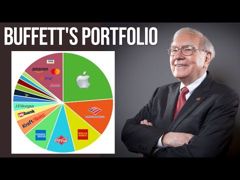 A deep look into Warren Buffett’s portfolioCooper AcademyBest for: Seeing what a 13F filing containsFreeBeginnerNarrated summary13F holdingsBuffett
A narrator walks through Berkshire Hathaway’s largest stock holdings as reported in its 13F filing at the time, explaining what each company does and why Buffett might own it.
Use it to
- Learn that fund holdings are public and where they come from
- Then open the current 13F on SEC EDGAR to see how much has changed
Watch out
Holdings data is a snapshot that goes stale within months, and the channel’s reasons for each position are its own guesses, not Buffett’s.
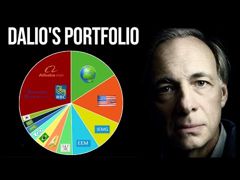 A deep look into Ray Dalio’s portfolioCooper AcademyBest for: An illustration of broad diversificationFreeBeginnerNarrated summary13F holdingsDiversification
A narrated breakdown of Bridgewater’s reported public holdings, with commentary on how the fund spreads money across asset classes and regions and uses gold and bonds alongside stocks.
Use it to
- See what an all weather style spread of assets looks like
- Notice how different it is from a concentrated Buffett portfolio
Watch out
A 13F shows only U.S. listed securities, so the video misses most of what a macro hedge fund actually does, and the data is dated.
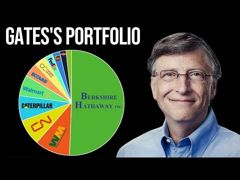 A deep look into Bill Gates’s portfolioCooper AcademyBest for: A story about reducing concentrationFreeBeginnerNarrated summary13F holdingsDiversification
A narrated look at the stock holdings reported by the Gates Foundation Trust and how Gates has diversified away from Microsoft over the years into a broad set of businesses.
Use it to
- See why someone with one giant holding sells down over time
- Compare the trust’s holdings with Berkshire’s
Watch out
It describes a charitable trust’s portfolio as if it were Gates’s personal account, and the holdings have changed since the video was made.
Large U.S. investment managers must disclose their stock holdings each quarter in a 13F filing, which is where portfolio videos get their data.
Part 11 of 12 · Quick reference
Which one for which job
Which one for which job
| Job | Start here | Also good |
|---|---|---|
| Understand what a stock exchange does | Kurzgesagt explainer | BuzzFeed eight minute overview |
| Learn the accounting behind a company | Ackman’s Big Think lecture | Khan Academy stocks and bonds |
| Decide between index funds and stock picking | Investing 101 (Ben Felix) | The case for index funds |
| Set expectations for returns | Do stocks return 10% on average? | Bogle at MIT |
| Choose a stock and bond mix | Choosing an asset allocation | Dollar cost averaging vs. lump sum |
| Pick a retirement account | NerdWallet Roth IRA vs 401(k) | Two Cents (PBS) |
| Hear Buffett directly | 2025 Berkshire annual meeting | Florida University talk |
| Learn to value a business | Damodaran session 1 | Greenblatt at Google |
| Understand crashes and bubbles | Market crashes (2025 edition) | Marks at UCLA Anderson |
| See why interest rates move markets | Dalio’s economic machine | WSJ on the 2% target |
| Avoid scams and check a broker | SEC channel | The Plain Bagel |
A talk by an investor is a primary source; a video about an investor is a summary to check.
Part 12 of 12 · Try it
Can you turn one lecture into a real check?
Open the 2025 Berkshire Hathaway annual meeting and watch the first thirty minutes with a notebook. Write down three claims Buffett makes about a business or about the economy.
Now pick one U.S. company you use every week, go to SEC EDGAR full text search, open its latest 10-K and read the Business and Risk Factors sections. For each of your three notes, mark whether the filing supports it, contradicts it or does not say. That three line table is the whole skill this library teaches.
A claim you have verified in a filing is worth more than ten you have only heard.
Quick check
Quick quiz: test what you just read
Pick an answer to see why it is right. 5 questions, no account needed.
1. Which of these is a primary source for what Warren Buffett thinks?
2. A video walks through a billionaire’s current stock holdings. Where does that data most likely come from?
3. A channel that posts a great lecture also sells a trading course. What is the right response?
4. Where can you read a U.S. company’s audited annual report for free?
5. A speaker in a 2018 conference video says the market is expensive and investors should be cautious. How should you use that today?
Questions people ask
Investment videos FAQ
Do I need to watch all of these?
No. The library is grouped by job so you can pick one or two videos from the group that matches your question this week. A beginner gets most of the value from the first three groups and one full Berkshire meeting.
Why are so many videos from Ben Felix?
His channel cites the academic research behind each claim and links the papers in the description, which is rare on YouTube. Several of his videos from 2023 to 2025 answer exactly the questions beginners ask, so they appear in the groups where they fit. He works for a wealth management firm, which the cards note.
Are the portfolio breakdown videos useful?
They are useful for learning that fund holdings are public and what a 13F filing looks like. They are not a shopping list, because the data is a dated snapshot, the narrator’s reasons are guesses and copying positions without the process behind them is not investing.
How do I know whether a finance YouTuber is trustworthy?
Look for named sources in the description, a clear statement of how the channel makes money and claims you can check in a filing or dataset. Be cautious with titles that promise wealth or secrets, channels that sell courses or signals, and videos that never say the words risk or fees.
Some speakers manage funds or are not U.S. based. Does that matter?
The principles they describe, such as judging quality and paying a fair price, travel well. What may not translate is the specific companies, tax rules and account types they mention, so when a speaker uses examples from another market, check the U.S. equivalent before acting on anything.
Why include six hour annual meeting recordings?
Because they are the primary source. Every Buffett compilation on YouTube is cut from recordings like these, and watching even an hour of the original shows you the context, the hesitation and the questions he declines to answer, which the clips remove.
You finished this step.
Keep learning with the quizzes and resources in the investment library.
Return to this library whenever you want to explore another resource.
Your notes on one card, and what comes next
- Step 1 · DoneInvestment Videos
See your notes on one card
- Use the video library to choose a topic and write one specific question before watching.
- Separate a speaker’s explanation or opinion from claims you can verify.
- Turn the viewing into an activity by checking one claim in an original source.
- 2Step 2 · NowCheck your understanding
Choose a quiz to put your investing knowledge into practice.
Explore quizzes - 3Step 3Continue on the learning pathThe learning pathFree
Learn the rest in the right order
Ten modules of lessons, videos, tools and quizzes, ordered so each step builds on the last.
Open the learning path
Want the full sequence? See the course outline →
Sources and assumptions
StockEducation provides general education, not personal financial, tax or legal advice. Companies and funds named here are teaching examples only. Nothing here recommends buying or selling any security. Investing involves risk, including the loss of money you invest.


Leave a Reply
You must be logged in to post a comment.